
1
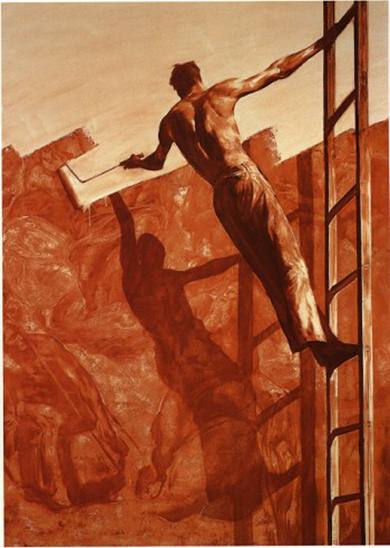
Mark Tansey,Triumph OverMastery II,1987
2
Michelangelo,The LastJudgment,Sistine Chapel


3
The Year in Review…
Gardner’s Art Through the Ages
Prehistoric
4
Prehistoric Art – spans from approx 30,000 BCE – 2000 BCE
•Paleolithic: (key date: 15,000 BCE)
•“paleo”- means old or ancient
•“lithos”- means stone
•Neolithic: (key date: 7,000 BCE)
•“neo” – means new
As cool as this art is, it is not on the exam. Also, you can NOT useprehistoric art when you write essays for the APAH Exam. Be careful!
5
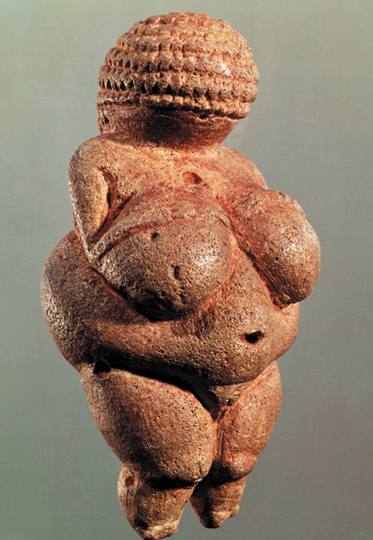
Figure 1-4 Nude woman (Venusof Willendorf), from Willendorf,Austria, ca. 28,000–25,000 BCE.Limestone, approx. 4 1/4” high.Naturhistorisches Museum, Vienna.
•Statuette: a small staute orsculpture, a figurine
•Subtractive (or reductive)sculpture: material wasremoved, or subtracted, to makethe form
Paleolithic Art
6
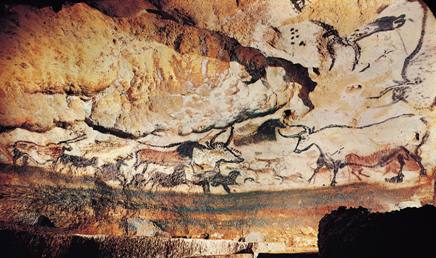
Figure 1-11 Hall of theBulls (left wall), Lascaux,Dordogne, France, ca.15,000–13,000 BCE. Largestbull approx. 11’ 6” long.
Paleolithic Art
•contour/contour line: a continuous line defining the outer shape of afigure or object
•optical view: when a painter draws an image so that the representationlooks as it appears from a fixed viewpoint
•descriptive view: when a painter draws an image but rejects the opticalview in favor of a perspective which better defines or describes theconcept of the image (ex. frontal horns are more “bull-like”… )
7
Figure 1-19 Aerial view ofStonehenge, SalisburyPlain,Wiltshire, England, ca.2550–1600 BCE. Circle is97' in diameter; trilithonsapprox. 24' high.

Neolithic Art
•Stonehenge is the best-known Neolithic monument
•Henge: a circle of stones… also known as a cromlech
•Currently, archeologist speculate that Stonehenge is a remarkablyaccurate solar calendar
8
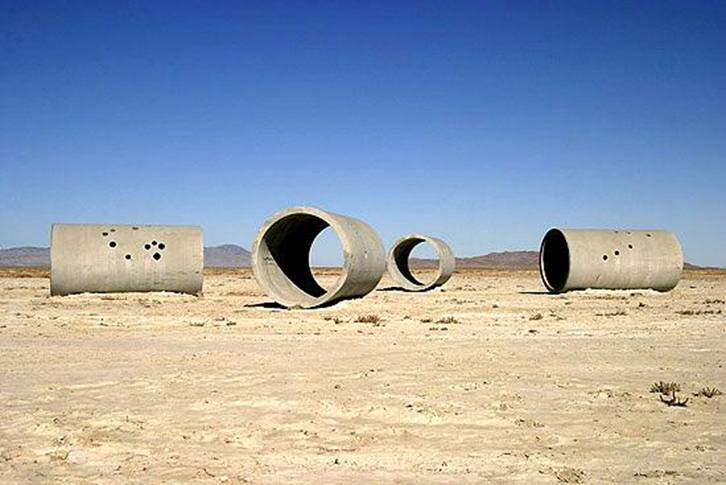
Newer art that comments upon or is similar to prehistoric art istotally okay to choose for an essay topic…
•Nancy Holt Sun Tunnels 1975 Utah Desert
10

… Discarding the Frameby Mark Tansey, acontemporary, post-modern artist…
Ancient Near East
11
(2900-2300 BCE) Sumerian 27th C BCE
(2300-2150 BCE) Akkadian 23rd C BCE
(2150-2000 BCE) Neo-Sumerian
(2000-1600 BCE) Babylonian 18th C BCE
(1600-900 BCE) Hittite
(900-600 BCE) Assyrian 8th C BCE
(600-550 BCE) Neo-Babylonian 6th C BCE
(550-350 BCE) Persian
(350-250 BCE) Seleucid and Roman
(250 BCE–650 CE) Sasanian
Art of the Ancient Near East does count as “beyond theEuropean tradition” for the APAH Exam.
12
Figure 2-8a War side of theStandard of Ur, from Tomb779, Royal Cemetery, Ur(modern Tell Muqayyar), Iraq,ca. 2600 BCE. Wood inlaidwith shell, lapis lazuli, and redlimestone, approx. 8” x 1’ 7”.British Museum, London.
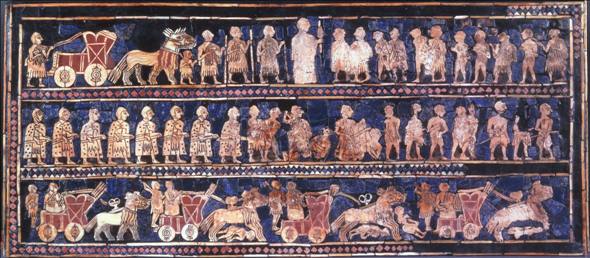
Sumerian
The artist wanted to create a narrative abouthow the Sumerians won and celebrated a greatmilitary victory
The artist divided each side panel into threehorizontal bands called registers, this storytelling technique can be seen today in comics
27th C BCE
13
Figure 2-8b Peace sideof the Standard of Ur,from Tomb 779, RoyalCemetery, Ur (modernTell Muqayyar), Iraq, ca.2600 BCE. Wood inlaidwith shell, lapis lazuli,and red limestone,approx. 8” x 1’ 7”.British Museum,London.

Sumerian
Hierarchical scale: an artistic convention inwhich greater size means greater importance
The Standard of Ur reads from bottom to topand from left to right, starting with the warside
27th C BCE
14
Figure 2-14 Ziggurat(northeastern facadewith restored stairs), Ur(modern Tell Muqayyar),Iraq, ca. 2100 BCE.

Sumerian
The Sumerians believed that each city-state was under the specialprotection of a god or goddess
Ziggurat: “mountain of the gods” a monumental platform for a templemade of mud bricks and bitumen, rising high above the city-center
Known to the Hebrews as the Tower of Babel, the tallest ziggarat wasbuilt in Babylon at 270 feet high
27th C BCE
15
Figure 2-13 Victory stele of Naram-Sin, fromSusa, Iran, 2254–2218 BCE. Pink sandstone,approx. 6’ 7” high. Louvre, Paris.

Akkadian
Stele: a carved stone slab used to markgraves or to commemorate historicalevents
The image clearly proclaims Naram-Sin’s military and religious authority ashe is by far the largest figure (hierarchyof scale)
He triumphantly tramples bodies of thefallen enemy, some of whom beg futilelyfor mercy
23rd C BCE
16
Figure 2-16 Stele with law code ofHammurabi, from Susa, Iran, ca. 1780BCE. Basalt, approx. 7’ 4” high. Louvre,Paris.

Babylonian
In about 1780 BCE a successful generalnamed Hammurabi conquered all ofMesopotamia
The capital of the new empire, Babylon,quickly became a thriving commercialcenter
Hammurabi put together a set of laws tohelp settle disputes between people inhis growing empire
18th C BCE
17
Figure 2-21 Lamassu (winged, human-headed bull), from the citadel of Sargon II,Dur Sharrukin (modern Khorsabad), Iraq,ca. 720–705 BCE. Limestone, approx. 13’10” high. Louvre, Paris.

Assyrian
A thousand years afterHammurabi, the Assyriansconquered Mesopotamia
Assyrian rulers built vast palacesto express their power and impressconquered peoples
8th C BCE
18
Figure 2-25 Ishtar Gate (restored),Babylon, Iraq, ca. 575 BCE. Glazedbrick. Staatliche Museen, Berlin.

Neo-Babylonian, 6th C BCE
The Assyrian Empire fell in 612, and anew ruler, Nebuchadnezzar II, madeBabylon the greatest city inMesopotamia
This is the time of Babylon’s famous“Hanging Gardens” one of the originalseven wonders of the world
Named in the honor of Ishtar, thegoddess of love, this gate spanned aprocessional route that led to the city’stowering ziggurat, the Tower of Babel
Egypt
19
•Old Kingdom: 2500 BCE (pyramids) 26th C BCE
•New Kingdom: 1500 BCE (temples) 16th C BCE
•Amarna Period: 1350 BCE (Akhenaton) 14th C BCE
•Conquered by Persia (525 BCE) 6th C BCE
•Conquered by Greece (332 BCE) 4th C BCE
•Conquered by Rome (30 BCE) 1st C BCE
20
Figure 3.4 IMHOTEP, Stepped Pyramid and mortuaryprecinct of Djoser, Saqqara, Egypt, Dynasty III, ca. 2630–2611 BCE.

200 ft
Old Kingdom
•IMHOTEP is the firstrecorded “artist” inWestern history… Hedesigned and made thisfor King Djoser. (Zoser)
•He was the pharaoh’schancellor, a high priestto the Sun God Re andan architect
•The stepped pyramid design quickly evolved into the geometricallyharmonious pyramids, the most famous of which are at Giza
21
Figure 3-13 Menkaure and Khamerernebty (?),from Gizeh, Egypt, Dynasty IV, ca. 2490–2472BCE. Graywacke, approx. 4’ 6 1/2” high. Museumof Fine Arts, Boston.

Old Kingdom
•Menkaure is the son of Khafre
•Portrayed with youthful, idealized bodies,the royal couple gazes confidently andserenely into the future
•Notice that their left legs are slightlyadvanced, this pose influenced early Greeksculpture
22
Figure 3-14 Seated scribe(Kay?), from his mastaba atSaqqara, Egypt, Dynasty V,ca. 2450–2350 BCE.Painted limestone, approx.1’ 9” high. Louvre, Paris.

Old Kingdom
•This sculpture is animportant exampleof a statue thatrepresents a non-royal official
23
Figure 3-21 Mortuarytemple of Hatshepsut(with the Middle Kingdommortuary temple ofMentuhotep II at left), Deirel-Bahri, Egypt, DynastyXVIII, ca. 1473–1458 BCE.The New Kingdomwas the zenith ofAncient Egypt’sprosperity and power

The New Kingdom
•Warrior Kings conquered new territory, built impressive temples, andcarved elaborate tombs in the Valley of the Kings
24
Figure 3-22 Hatshepsut with offering jars, fromthe upper court of her mortuary temple, Deir el-Bahri, Egypt, ca. 1473–1458 BCE. Red granite,approx. 8’ 6” high. Metropolitan Museum of Art,New York.

• Thutmase III removed or shattered
all her portraits after her death.
•This sculpture was reassembled.
The pieces were found in a dump.
•Here she is represented as male with
a man’s headdress and ceremonial
clip-on beard.
The New Kingdom
25
Figure 3-23 Temple of Ramses II, Abu Simbel, Egypt, Dynasty XIX, ca. 1290–1224BCE. Sandstone, colossi approx. 65’ high.

The New Kingdom
26
Figure 3-26 Alternate ViewHypostyle Hall, diagonal view upwardswith closed & open papyrus capitalswith clerestory window

The New Kingdom
•Clerestory: Window openings inbuildings that are well above groundlevel that provide daylight
•Can you identify the open andclosed papyrus capitals?
27
Figure 3-30 Fowling scene, fromthe tomb of Nebamun, Thebes,Egypt, Dynasty XVIII, ca. 1400–1350 BCE. Fresco on dry plaster,approx. 2’ 8” high. British Museum,London.

papyrus
The New Kingdom
•Fresco: painting on lime plaster, either dry (fresco secco ) or wet (truefresco or buon fresco) in true fresco, the pigments become chemicallybound to the freshly laid lime plaster… fesco secco is more fragile…
28
Figure 3-32 Akhenaton, from thetemple of Aton, Karnak, Egypt, DynastyXVIII, ca. 1353–1335 BCE. Sandstone,approx. 13’ high. Egyptian Museum,Cairo.

Amarna period
•Akhenaton is the most controversialand intriguing pharaoh of Egypt’shistory
•He simultaneously launched religiousand artistic revolutions that challengedentrenched religious and aestheticconventions
29
Figure 3-33 THUTMOSE, Nefertiti, fromTell el-Amarna, Egypt, Dynasty XVIII, ca.1353–1335 BCE. Painted limestone, approx.1’ 8” high. Ägyptisches Museum, Berlin.

Amarna period
•Nefertiti’s name means “thebeautiful one is here”
•Her refined features and long,graceful neck convey a sensualitynot seen on other Egyptian art
30
Figure 3-35 Akhenaton, Nefertiti, and three daughters, from Tell el-Amarna, Egypt,Dynasty XVIII, ca. 1353–1335 BCE. Limestone, approx. 12 1/4” high. ÄgyptischesMuseum, Berlin.

Amarna period
31
Figure 3-37 Death mask of Tutankhamen,from the innermost coffin in his tomb atThebes, Egypt, Dynasty XVIII, ca. 1323BCE. Gold with inlay of semiprecious stones,1’ 9 1/4” high. Egyptian Museum, Cairo.
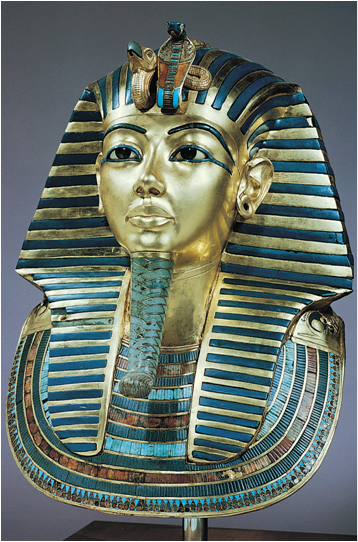
•The tomb contained over 5000works of art, the most famous nowbeing this death mask
•Note the return to conservatism, yetthe curvilinear influence of theAmarna period remains
•King Tut did revive the worship ofAmen and other gods, and returnedthe capital to Thebes
(Post-Amarna) New Kingdom
32
Figure 3-40 Mentuemhet, from Karnak,Egypt, Dynasty XXVI, ca. 650 BCE.Granite, approx. 4’ 5” high. EgyptianMuseum, Cairo.

(Post-Amarna) New Kingdom
•As the New Kingdom declines, andEgypt looses its power in the Near East,see how the sculpture is still soreminiscent of the Old Kingdom…
33
Figure 34-59 JUDY CHICAGO, The Dinner Party, 1979. Multimedia, includingceramics and stitchery, 48’ x 48’ x 48’ installed.

Post-Modern
•Greatwomen fromthe past areinvited to“the table”…
•Guess whohas a spot?
34
Figure 34-59 JUDY CHICAGO, The Dinner Party, 1979. Multimedia, includingceramics and stitchery, 48’ x 48’ x 48’ installed.
Post-Modern

Aegean (Proto-Greek)
35
•Cycladic Art
•From the Cyclades
•Key date: 26th C BCE
•Minoan Art
•From Crete
•Key date: 16th C BCE
•Mycenaean Art
•From Peloponnesus
•Key date: 13th C BCE
36
Figure 4-1 Figurine of awoman, from Syros (Cyclades),Greece, ca. 2500–2300 BCE.Marble, approx. 1’ 6” high.National ArchaeologicalMuseum, Athens.

•Cycladic Art
26th C BCE
37
Figure 4-5 Stairwell in theresidential quarter of the palaceat Knossos (Crete), Greece, ca.1700–1400 BCE. GrandStaircase of the E Wing, lowerlevel (1994)

© 2005 Saskia Cultural Documentation, Ltd.
•Minoan Art
16th C BCE
38
Figure 4-7 Bull-leaping, from the palace at Knossos (Crete), Greece, ca.1450–1400 BCE. Fresco, approx. 2’ 8” high, ArchaeologicalMuseum,Herakleion.

•Minoan Art
16th C BCE
39
Figure 4-9 Landscape with swallows (Spring Fresco), from Room Delta2, Akrotiri, Thera (Cyclades), Greece, ca. 1650 BCE. Fresco, approx. 7’6” high. National Archaeological Museum, Athens.

•Minoan Art
16th C BCE
40
Figure 4-20 Lion Gate, Mycenae, Greece, ca. 1300–1250 BCE.Limestone, relief panel approx. 9’ 6” high.

•Mycenaean Art
13th C BCE
41
Figure 4-24 Inlaid dagger blade with lion hunt, from Grave Circle A,Mycenae, Greece, ca. 1600–1500 BCE. Bronze, inlaid with gold, silver,and niello, approx. 9” long. National Archaeological Museum, Athens.
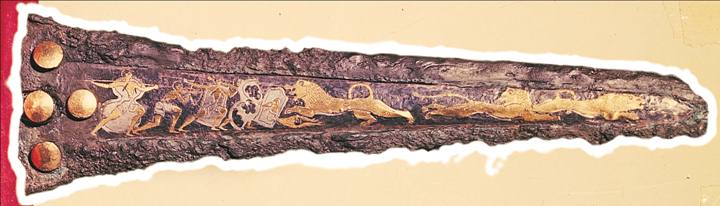
•Mycenaean Art
13th C BCE
Greece
42
•Key Dates for Greek Art History:
•Geometric 8th - 7th C BCE (800-600 BCE)
•Archaic 6th C BCE (600-500 BCE)
•Severe 5th C BCE (500-480 BCE)
•Classical 5th C BCE (480-404 BCE)
•Late Classical 4th C BCE (404-323 BCE)
•Hellenistic3rd - 2nd C BCE (323-80 BCE)
43
Figure 5.1 Geometric krater, from theDipylon cemetery, Athens, Greece, ca.740 BCE. Approx. 3’ 4 1/2” high.Metropolitan Museum of Art, New York.

The Geometric Period
krater – mixing bowl
Dipylon - a gateway to the west ofancient Athens near which adistinctive style of pottery hasbeen found
•Made for agrave
•Depicts afuneraryscene
Meander, or key pattern – anornamental pattern of contiguousstraight lines joined at rightangles
8th - 7th C BCE
44
Figure 5-3 Mantiklos Apollo, statuette of ayouth dedicated by Mantiklos to Apollo, fromThebes, Greece, ca. 700–680 BCE. Bronze,approx. 8” high. Museum of Fine Arts,Boston.

The Geometric Period
•As implied by the name, art from theGeometric Period is characterized by the useof geometric shapes
•Perhaps this votive offering once held abow, like Apollo
•Greeks conceived their gods as havinghuman form (religious context)
8th - 7th C BCE
45
Figure 5-8 Kouros, ca. 600 BCE. Marble,approx. 6’ 1/2” high. Metropolitan Museum ofArt, New York.

The Archaic Period
•Kouros – a freestanding, nude, male youthsculpture
•Remind you of anyone?
6th C BCE

46
Figure 5-8 Kouros,ca. 600 BCE. Marble,approx. 6’ 1/2” high.MetropolitanMuseum of Art, NewYork.

Figure 3-40Mentuemhet, fromKarnak, Egypt,Dynasty XXVI, ca.650 BCE.
Granite, approx. 4’5” high. EgyptianMuseum, Cairo.
The ArchaicPeriod
6th C BCE
47
Figure 5-10 Kroisos, from Anavysos, Greece,ca. 530 BCE. Marble, approx. 6’ 4” high.National Archaeological Museum, Athens.

The Archaic Period
•70 years after the New York kouros, thesculptures began to look like this:
•Note the strange smile: this is called thearchaic smile, which was a symbolicindication that the figure was alive
6th C BCE
48
Figure 5-11 Peplos Kore, from theAcropolis, Athens, Greece, ca. 530 BCE.Marble, approx. 4’ high. AcropolisMuseum, Athens.

The Archaic Period
peplos – a simple, long, woolen
belted garmet (columnar)
• innovation: arm was extended forward,indicating an attempt at motion
• note the soft looking flesh and archaicsmile
6th C BCE
49
Figure 5-13 Temple of Hera I (“Basilica”),Paestum, Italy, ca. 550 BCE.

Archaic Period
doric/ionic entasis entablature

6th C BCE
50
Figure 5-20 ANDOKIDES PAINTER, Achilles and Ajax playing a dicegame (Attic bilingual amphora), from Orvieto, Italy, ca. 525–520 BCE.Black-figure side (left) and red-figure side (right). Approx. 1’ 9” high.Museum of Fine Arts, Boston.


Archaic Period
6th C BCE
51
Figure 5-33 Kritios Boy, from the Acropolis,Athens, Greece, ca. 480 BCE. Marble, approx. 2’10” high. Acropolis Museum, Athens.

Early Classical Period (Severe Style) 5th C BCE
• breaking away from the Archaic kouroi
• a sculptor is investigating how the figure
actually stands
• a dip in the hip indicates a shift in weight
• head is slightly turned and tilted
• contrapposto – counterbalance; “weight –
shift” , counter-positioning of the
body about a central axis, creating
tension on one side and relaxation
on the other side
• contrapposto is what separates Archaic
and Classical Greek statuary
52
Figure 5-38 POLYKLEITOS, Doryphoros (SpearBearer). Roman marble copy from Pompeii, Italy, aftera bronze original of ca. 450–440 BCE, 6’ 11” high.Museo Nazionale, Naples.

The Classical Period
• The quest to sculpt the ideal male formculminated in Doryphoros, by Polykleitos
•Long since lost, the original bronze wasmade between 450 and 440 BCE, and likemany Greek statues, are only knownthrough Roman copies
•Polykleitos was a renowned sculptorwhose statues of young warriors andathletes embodied the Classical ideals ofharmony and proportion
5th C BCE
53
Figure 5-42 IKTINOS andKALLIKRATES, Parthenon, theTemple of Athena Parthenos (viewfrom the northwest), Acropolis,Athens, Greece, 447–438 BCE.

Classical Greece
•The Persian wars left much of Athens in ruins
•Pericles persuaded the Athenian Assembly to vote to dedicate hugesums of money to pay for this temple
•The Parthenon was inspired by Pericles and designed by thearchitects Iktinos and Kallikrates
•Phidias, a leading Athenian artist, supervised the sculptures
5th C BCE
54
Figure 5-54 Nike adjusting hersandal, from the south side of theparapet of the Temple of Athena Nike,Acropolis, Athens, Greece, ca. 410 BCE.Marble, approx. 3’ 6” high. AcropolisMuseum, Athens.
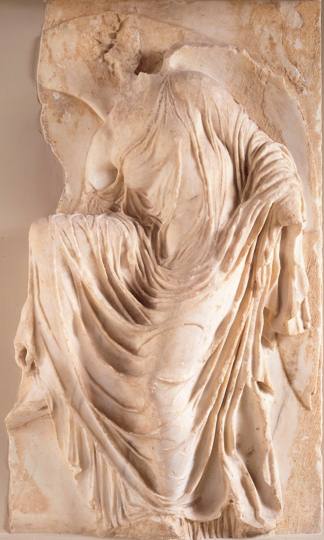
Classical Greece
5th C BCE
55
Figure 5-52 Caryatid from the south porch of theErechtheion, Acropolis, Athens, Greece, ca. 421–405 BCE. Marble, 7’ 7” high. British Museum,London.

Classical Greece
•The six maidens from the Porch of the Maidensare all caryatids
•Caryatid: female figures that function assupporting columns
•Their relaxed, contrapposto pose, gracefuldrapery and serene expressions embody theclassical style
5th C BCE
56
Figure 5-60 PRAXITELES, Aphrodite ofKnidos. Roman marble copy after anoriginal of ca. 350–340 BCE. Approx. 6’ 8”high. Vatican Museums, Rome.

Late Classical Period
•Praxiteles was one of the most renownedand controversial of the 4th C BCEsculptors
•Although the Greeks were used to seeingstatues of male nudes, this was the firstlife sized female nude
•He created a sensation by portrayingAphrodite as she prepared to take a bath
4th C BCE
57
Figure 5-62 PRAXITELES, Hermes andthe infant Dionysos, from the Temple ofHera, Olympia, Greece. Marble copy afteran original of ca. 340 BCE, approx. 7’ 1”high. Archaeological Museum, Olympia.

The Late Classical Period
• “S” curve
• dreamy, dewy gaze
• sensuous, tender
• even more accurate
anatomy

Figure 5-38 POLYKLEITOS,
Doryphoros (Spear Bearer). Roman
marble copy from Pompeii, Italy, after
a bronze original of ca. 450–440 BCE,
6’ 11” high. Museo Nazionale, Naples.
(Classical)
5th C BCE
58
Figure 5-65 LYSIPPOS, Apoxyomenos (Scraper).Roman marble copy after a bronze original of ca.330 BCE, approx. 6’ 9” high. Vatican Museums,Rome.

Late Classical Period
Lysippos chose typical Classicalsubjects, but depicted them in an unusualway
Here a young athlete is using a scraper toremove oil and dirt from his arm
The Scraper’s body is taller and lighter inappearance than Doryphoros
4th C BCE
59
Figure 5-64 Grave stele of a young hunter,found near the Ilissos River, Athens, Greece,ca. 340–330 BCE. Marble, approx. 5’ 6” high.National Archaeological Museum, Athens.

Late Classical Period
•The hunter’s aged, grief-strickenfather stands to the rightwondering how fate could havetaken his eldest son
•The hunter looks at the viewer,inviting sympathy and creating anemotional link between thespectator and the work
• This emotional appeal wouldbecome the hallmark of the newHellenistic art…
4th C BCE
60
Figure 5-68GNOSIS, Staghunt, fromPella, Greece, ca.300 BCE. Pebblemosaic, figuralpanel 10’ 2” high.ArchaeologicalMuseum, Pella.

Hellenistic Period
3rd - 2nd C BCE
61
Figure 5-78 Reconstructed west front of the Altar of Zeus, fromPergamon, Turkey, ca. 175 BCE. Staatliche Museen, Berlin.

Hellenistic Period
•Pergamom’s rulers strove to transform their city into a new Athens
•They collected Greek masterpieces and emulated Athens by erecting anumber of buildings atop their city’s acropolis
3rd - 2nd C BCE
62
Figure 5-79 Athena battlingAlkyoneos, detail of thegigantomachy frieze, from the Altarof Zeus, Pergamon, Turkey. Marble,approx. 7’ 6” high. Staatliche Museen,Berlin.

Hellenistic Period
•The most famous scene from the gigantomachy frieze is Athenaattacking the giant Alkyoneos
•Crying out in terror, the giant clings desperately to Athena’s arm as thegoddess violently wrenches him from the protective arms of hismother, Gaia
•Visibly distraught, Gaia vainly pleas with Athena to spare her son
3rd - 2nd C BCE
63
Figure 5-89 ATHANADOROS,HAGESANDROS, and POLYDOROSOF RHODES, Laocoön and his sons,from Rome, Italy, early first century CEMarble, approx. 7’ 10 1/2” high. VaticanMuseums, Rome.

Hellenistic Period
• Laocoon was a priest who wisely urged the Trojans to reject theapparent Greek peace offering of a wooden horse
•Furious that his clever ruse might be exposed, Poseidon sent two seamonsters to kill Laocoon and his two sons
•The sculptors focused on Laocoon’s desperate struggle to free himselfand his sons from the monster’s murderous grip
3rd - 2nd C BCE
64
Figure 5-86 Seated boxer, fromRome, Italy, ca. 100–50 BCE.Bronze, approx. 4’ 2 1/2” high.Museo Nazionale Romano, Rome.

Hellenistic Period
•Seated Boxer is not a youngathlete confidently waiting toreceive an award…
•He is a battered veteran withbroken teeth and a scarred face…
•He is an aging athlete resigned tohis fate…
•Fame and youth are fleeting…
3rd - 2nd C BCE
65
Figure 5-80 EPIGONOS(?), Gallicchieftain killing himself and his wife.Roman marble copy after a bronzeoriginal from Pergamon, Turkey, ca. 230–220 BCE, approx. 6’ 11” high. MuseoNazionale Romano-Palazzo Altemps,Rome.

Hellenistic Period
3rd - 2nd C BCE
66
Figure 5-81 EPIGONOS(?), Dying Gaul. Roman marble copy after abronze original from Pergamon, Turkey, ca. 230–220 BCE, approx. 3’ 1/2”high. Museo Capitolino, Rome.

Hellenistic Period
3rd - 2nd C BCE
67
Figure 5-87 Old market woman, ca.150–100 BCE. Marble, approx. 4’ 1/2”high. Metropolitan Museum of Art, NewYork.

Hellenistic Period
3rd - 2nd C BCE
68
Figure 5-82 Nike alighting on a warship(Nike of Samothrace), from Samothrace,Greece, ca. 190 BCE. Marble, figure approx. 8’ 1” high. Louvre, Paris.


Hellenistic Period
• the setting is the
prow of a ship
• in a fountain
• right arm was
raised
• feel the wind!
3rd - 2nd C BCE
69
Figure 5-83 ALEXANDROS OF ANTIOCH-ON-THE-MEANDER, Aphrodite (Venus deMilo), from Melos, Greece, ca. 150–125 BCE.Marble, approx. 6’ 7” high. Louvre, Paris.

Hellenistic Period
• a larger than life undressingof Aphrodite
• half dressed is more erotic
than total nudity
• left hand is separately
preserved, holds the
apple of Paris

3rd - 2nd C BCE
(late classical)
70
Figure 5-85 Sleeping satyr(Barberini Faun), fromRome, Italy, ca. 230–200 BCE.Marble, approx. 7’ 1” high.Glyptothek, Munich.

Hellenistic Period
3rd - 2nd C BCE
Asia
•South and Southeast Asia
•China
•Korea
•Japan
•Don’t sweat the key dates on Asian art…Please just realize everything we studied wasbefore the 12th C CE or so…
71
South and Southeast Asia
72
73
Figure 6-3 Seal with seated figure in yogic posture, from Mohenjo-daro,Pakistan, ca. 2600–1900 BCE. Steatite coated with alkali and baked, approx.1 3/8” X 1 3/8”. National Museum, New Delhi.

Indus Valley: Mohenjo-daro
•Male figure with a hornedheaddress in a traditionalyoga pose
•Man looks like he has 3faces
•Animals are in strict profileview
South and Southeast Asia
74
Figure 6-4 Lion capital of column erected by Ashoka at Sarnath, India,ca. 250 BCE. Polished sandstone, approx. 7’ high. Archaeological Museum,Sarnath.

Mauryan Empire
•When Alexander the Great reached theIndus River in 326, his troops refused to goforward…
•Reluctantly, he headed home, and died 3years later…
•His generals carved up his Empire forthemselves
South and Southeast Asia
75
Figure 6-5 Great Stupa, Sanchi, India, third century BCE to first centuryCE (View from the east).

What is this place?
•Buddhist Monastery
•Consists of many buildings including
temples (or viharas) and stupas
•The dome is 120 feet across and 54 feet high
•The dome is filled with dirt and rubble
•Symbolically, the dome represents the cosmos
The Great Stupa at Sanchi
South and Southeast Asia
•The 4 gateways (Toronas) arethe finest works of art atSanchi and the finest examplesof Buddhist art in India
•Without the patronage ofBuddhism in southeast Asianart, the art would becompletely different.

The Great Stupa at Sanchi
South and Southeast Asia
77
Figure 6-7 Yakshi, detail of eastern gateway, Great Stupa, Sanchi, India,mid first century BCE to early first century CE.
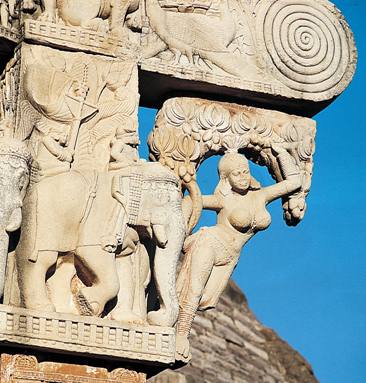
these carvings all
over the gates tell
the stories of the
Buddha’s many lives
yakshi – personification
of fertility and vegetation
she is under a mango tree
the pose is significant
yakshi
South and Southeast Asia
78
Figure 6-9 Meditating Buddha, fromGandhara, Pakistan, second century CE.Gray schist, 3’ 7 1/2” high. RoyalScottish Museum, Edinburgh.
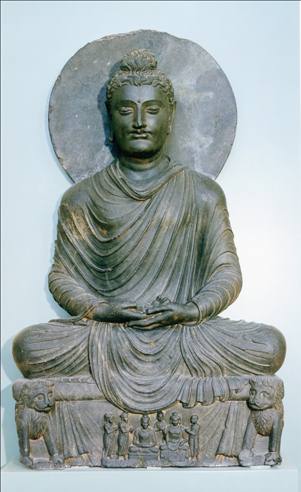
Greco-Roman Art and Gandhara
• first, the Persians under Darius I
conquered the Indus Valley in
517 – 509 BCE
• then Alexander the Great con-
quered the region in 326 BCE
• Greek influence in sculpture
termed Gandharten
•the region was Hellenized
South and Southeast Asia
79
Figure 6-9 Meditating Buddha, from Gandhara, Pakistan, second century CE. Gray schist, 3’ 7 1/2” high. Royal Scottish Museum, Edinburgh
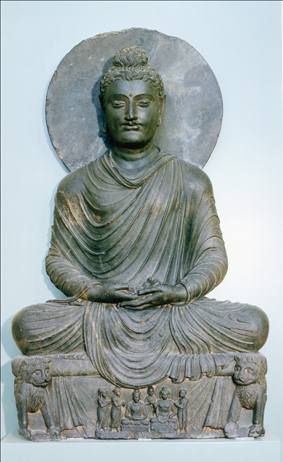

Figure 5-35 Charioteer, from a group dedicated by
Polyzalos of Gela in the Sanctuary of Apollo, Delphi,
Greece, ca. 470 BCE. Bronze, approx. 5’ 11” high.
Archaeological Museum, Delphi.
South and Southeast Asia
80
Figure 6-10 The life and death of the Buddha, frieze from Gandhara,Pakistan, second century CE. Schist, 2’ 2 3/8” X 9’ 6 1/8”. FreerGallery of Art, Washington, D.C.


South and Southeast Asia
81
Figure 6-16 Dancing Shiva,rock-cut relief in cave temple,Badami, India, late sixth century.

Shiva
•Hindu god of destruction
and regeneration
•often has multiple heads
and limbs – signs of his
superhuman nature
•body art!!!
•in his latter role he is some-
times a linga – cosmic pillar
•his son is Ganesha (elephant)
•his bull is Nandi
pre-Hartha, post Huns, Chalukya
South and Southeast Asia
82
Figure 6-17 Shiva as Mahadeva,Cave 1, Elephanta, India, ca. 550–575. Basalt, Shiva 17’ 10” high.

Shiva with three faces
•Side faces: one male, one female
•he is grimacing, has a curling
mustache and a serpent earring
•she is smiling
•she is Uma, Shiva’s creative
aspect
•he is Bhairava, Shiva’s
destructive aspect
•In the center, representing the
balance of both forces is Shiva
•cyclic notions of time (samsara)
South and Southeast Asia
83
Figure 6-24 Shiva as Nataraja,bronze in the Naltunai IshvaramTemple, Punjai, India, ca. 1000.
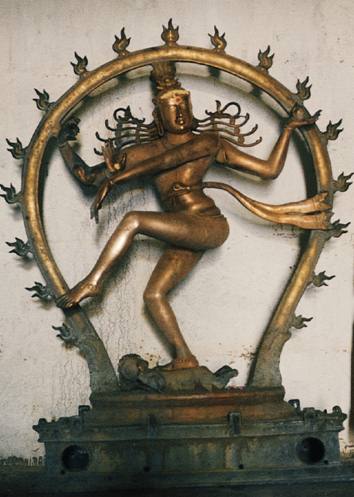
•nimbus – the light of glory
circling him
•solid bronze cast
•dancing atop a small figure
which represents
ignorance
•holding a drum and a flame
•hand gesture is saying
do not fear
•this statue would never look
like this when it is in
use…
Shiva
South and Southeast Asia
84
Figure 6-25 Death of the Buddha (Parinirvana), Gal Vihara, nearPolonnaruwa, Sri Lanka, eleventh to twelfth century. Granulite, Buddhaapprox. 46’ long.
Sri Lanka

•46 feet long, one of Sri Lanka’s
largest sculptures
•recumbent (reclining)
•Ananda mourning Shakyamuni’s
death
•Theravada Buddhism
•longest lived Buddhist tradition in
in the world…
South and Southeast Asia
85
Figure 6-29 Angkor Wat, Angkor, Cambodia, first half oftwelfth century.

•Khmer Kingship
•the purpose of these temples
was to associate kings
with their personal god:
either Shiva, Vishnu
or Buddha
•this temple is for Vishnu
•the five towers represent the five peaks of Mount Meru , the sacred
mountain at the center of the universe
Cambodia Suryavarman II
•religion and politics united
South and Southeast Asia
86
Figure 6-31Bayon,AngkorThom,Cambodia,ca. 1200.

Cambodia Jayavarman VII
•towers with carved
giant faces
•temple at Bayon
•watchful compassion?
•the king himself ?
(son of Suryavarman II)
South and Southeast Asia
China
87
88
Figure 7-2 Guang, probably from Anyang, China, Shang dynasty, twelfthor eleventh century BCE. Bronze, 6 1/2” high. Asian Art Museum of SanFrancisco, San Francisco (Avery Brundage Collection).

Shang Dynasty
•guang –
libation vessel
•Used in funeral ceremonies andsacrifice rituals for ancestors
•Shang decorative vocabularyincludes abstracted animal motifs
China
89
Figure 7-3 Standing figure, from Sanxingdui, China, ca. 1200–1050 BCE.Bronze, 8’ 5” high, including base. China Cultural Relics PromotionalCenter, Beijing.
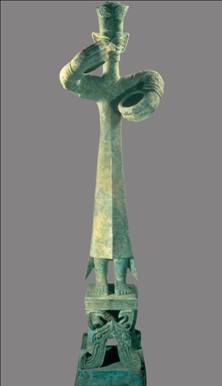
from Sanxingdui
•At the same time as the Shang, the people ofSanxingdui were also working with bronze…
•The gold, jade and bronze at Chengdu revealthat the Sanxingdui were very wealthy andindependent from the Shang
•This sculpture is the most dramatic example ofthe art of Sanxingdui at over 8 feet tall
China
90
Figure 7-4 Bi (disk), from Jincun(?), China, Eastern Zhou dynasty, fourthto third century BCE. Nephrite, 6 1/2” in diameter. Nelson-AtkinsMuseum of Art, Kansas City.

Zhou Dynasty
•Jade carving reached the peakof technical perfection duringthe Zhou dynasty
•Bi-disk: thin, flat, circularpieces of jade with a hole in thecenter, which may havesymbolized the circle of heaven
•Rows of raised spirals decoratethe surface
China
91
Figure 7-5 Army of the First Emperor of Qin in pits next to his burialmound, Lintong, China, Qin dynasty, ca. 210 BCE. Painted terracotta,average figure 5’ 10 7/8” high.

Qin Dynasty
•Excavations of this site began in 1974
•His burial mound is adjacent to these pitsof soldiers, and has yet to be dug up
•Researchers anticipate that the mound isfull of treasure, including a miniaturereplica of China with rivers of mercuryand jeweled stars in the ceilings…
China
92
Figure 7-8 Model of a house, Han dynasty, first century CE. Paintedearthenware, 4’ 4” high. Nelson-Atkins Museum of Art, Kansas City.

Han Dynasty
•This is a beautiful example of a Hanminiature
•no actual remains of Han buildings exist…
•models like this were found in graves
•Chinese raised beam construction
•walls not weight-bearing
China
93
Han Dynasty
Chinese raised beamconstruction:
•The varying lengths ofthe cross beams and thevariously placed purlinscreates the curved profileof the rooflines…
•This style ofconstruction also allowedfor a broad overhang ofthe eaves, another typicalfeature of Chinesearchitecture

beam
purlin
strut
rafters
eaves
China
94
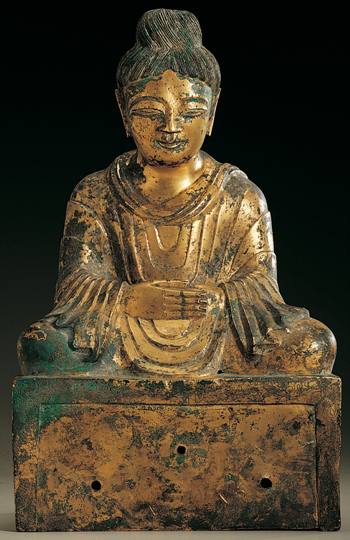
Figure 7-9 Shakyamuni Buddha, Zhao Dynasty, Period of Disunity, 338.Gilded bronze, 1’ 3 1/2” high. Asian Art Museum of San Francisco, SanFrancisco (Avery Brundage Collection).

Period of Disunity
•The earliest extant precisely datableChinese Buddhist image is this gildedbronze statuette (the date is inscribed)
•Shakyamuni Buddha = the historicalBuddha… the wise one of the Sakya tribe
•The earliest texts of the Buddha describehim as radiating golden light… hence thegilded bronze
•Gilded = gold, or gold-like…
China
95

96
Figure 7-11 Shakyamuni and Prabhutaratna, Northern Wei dynasty, 518.Gilded bronze, 10 1/4” high. Musée Guimet, Paris.

•mandorla – flamelike
nimbus behind each
•lalitasana pose – shows
relaxation
•it was made for private
devotion at home or an
offering at a temple
Period of Disunity
China
97


98
Figure 7-12 Vairocana Buddha, disciples, and bodhisattvas, LongmenCaves, Luoyang, China, Tang dynasty, completed 675. Buddha, approx. 44’high.

Tang Dynasty
•44 ft tall Buddha
•1352 caves
•97,000 statues
•3,600 inscriptions
•785 carved niches
•inspired by cave
temples of India
These caves took 2centuries to carve...
The Longmen Caves
China
99
Figure 7-10 GU KAIZHI, Lady Feng and the Bear, detail of Admonitionsof the Instructress to the Court Ladies, Period of Disunity, late fourthcentury. Handscroll, ink and colors on silk, 9 3/4” X 11’ 4 1/2”. BritishMuseum, London.

Period of Disunity
•Chinese painting in general is ona much more intimate scale thanWestern painting
•It is usually presented on scrollsand screens, best viewed by 1 or 2people at a time…
•Chinese are master of the brush…ink painting and calligraphy arehonored traditions
China
100
Figure 7-15 Attributed to YAN LIBEN, Emperor Xuan and attendants,detail of The Thirteen Emperors, Tang dynasty, ca. 650. Handscroll, inkand colors on silk, detail: 1‘ 8 1/4” X 1’ 5 1/2”; entire scroll, 17’ 5” long.Museum of Fine Arts, Boston.

Tang Dynasty
•Many art historians call theTang dynasty the golden ageof Chinese figure painting
•This is a masterpiece of linedrawing and color washes
•This handscroll depicts 13rulers from the Han to Suidynasties
China
101
Figure 7-16 Palace ladies, detail of a wall painting in the tomb of PrincessYongtai, Qianxian, China, Tang dynasty, 706. Approx. 5’ 10” X 6’ 6”.

Tang Dynasty
How did the artisteffectively create“space” in thispainting?
China
102
Figure 7-17 Neighing Horse, Tang dynasty, eighth to ninth century.Glazed earthenware, 1’ 8” high. Victoria and Albert Museum, London.

Tang Dynasty
•The horse was just as esteemed subjectmatter as the figure or
landscape
•thick neck, small head = steed of nobility
•super fancy saddle
•colorful glazes streamed down
for decoration (especially greens and red-oranges) = this is distinctly “Tang”
China
103
Figure 7-18 FAN KUAN, Travelers among Mountainsand Streams, Northern Song period, early eleventhcentury. Hanging scroll, ink and colors on silk, 6’ 7 1/4”X 3’ 4 1/4”. National Palace Museum, Taibei.

•light, shade, distance and texture
•a great time for landscape
•the gigantic mountains and tiny
Figures = very Daoist
•to really appreciate this you have to
not only see the big picture, but also
all the strokes
Northern Song
China
104
Figure 7-19 Attributed to HUIZONG, Auspicious Cranes, section of ahandscroll, Northern Song period, 1112. Ink and colors on silk, 1’ 8 1/8” X4’ 6 3/8”. Liaoning Provincial Museum, Shenyang.

Northern Song
This is actually a propaganda piece commemorating the appearance of 20white cranes at the palace gates during a festival
The cranes were an auspicious sign, proof that Heaven approved…
Perfection ofpoetry,calligraphy andpainting
China
105
Figure 7-20 Meiping vase, from Xiuwi, China, Northern Song period,twelfth century. Stoneware, Cizhou type, with sgraffito decoration, 1’ 71/2” high. Asian Art Museum of San Francisco, San Francisco (AveryBrundage Collection).
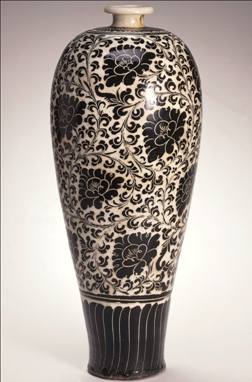
Northern Song
•elegant contour (outline)
•embracing vine design
•“high-shouldered” form
•sgraffitto – incising technique
•Meiping = vase for plum blossoms
China
106
Figure 7-21 Foguang Si Pagoda,Yingxian, China, Liao Dynasty,1056.

Northern Song
•pagodas – towers
•this one is made of wood
•216 feet tall
•Raised Beam Construction
•holds sacred images of Buddha
China
107
Figure 7-23 MA YUAN, On a Mountain Path in Spring, SouthernSong period, early thirteenth century. Album leaf, ink and colors onsilk, 10 3/4” X 17”. National Palace Museum, Taibei.
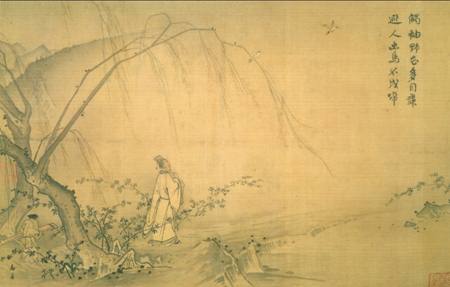
Brushed by his sleeves, wild flowers dance in the wind
Fleeing from him, hidden birds cut short their song - Ningzong
Southern Song
China
108
Figure 7-24 ZHOU JICHANG, Arhats GivingAlms to Beggars, Southern Song period, 1184.Ink and colors on silk, 3’ 8” X 1’ 9”. Museum ofFine Arts, Boston.

Southern Song
•Arhats – enlightened disciples of Buddha
who have attained nirvana by suppressing
all earthly desire
•How does the artist establish status?
China
Korea
109
110
Korea:

Crown, from north mound of tomb 98 at Hwangnamdong, near Kyongju,Korea, Silla kingdom, 5th to 6th C. Gold, 10 and ¾ “ high. KyongjuNational Museum, Kyongju.
•These gorgeous crowns are uniquelyKorean
•Kyongju’s ancient name is Kumsong,meaning city of gold
•The band, uprights and spangles were cutfrom sheet gold and embossed along theedges
•Gold rivets and wires hold it altogether
Gold Crowns in Silla Tombs:
Korea
111
Figure 7-27 Shakyamuni Buddha, at entrance to cave temple, Sokkuram,Korea, Great Silla, 751–774. Granite, approx. 11’ high.

Korea – Silla Kingdom
•The Silla rulers embraced Buddhism asboth a source of religious enlightenmentand as a protective force
•The Buddhist temples were not merelyplaces of worship, but also a supernaturaldefense against external threats
•Unfortunately, none of these templeshave survived
Korea
112
Korea: Celadon Ware

Maebyong vase, Koryo period, ca. 918-1000. Celadon with inlaiddecoration, 1’4 ½ “ tall. Kansong Art Museum, Seoul.
•Celadon wares are characterized byhighly translucent iron-pigmentedglazes, fired in an oxygen-deprivedkiln to become gray, pale blue, palegreen, or brownish olive
•Incised or engraved designs alter thethickness of the glaze to produceelegant tonal variations
Korea
Japan
113
114
Figure 8-1 Vessel, fromMiyanomae, NaganoPrefecture, Japan, MiddleJomon period, 2500–1500BCE. Earthenware, 1’ 11“ x1”. Tokyo National Museum,Tokyo.

Jomon Period 10,500 – 300 BCE
Japan’s earliest culture was the Jomon
jomon refers to “cord markings”
sherds (shards) of Jomon ceramics
date back to 10,000 BCE – oldest sherds
in the world
this is a great example of “modeled”
rather than painted surfaceornamentation
Japan
115
Figure 8-2 Dotaku (bell) with incised figural motifs, from KagawaPrefecture, Japan, Late Yayoi period, 100–300. Bronze, 1’ 4 7/8” high.Tokyo National Museum, Tokyo.

Yayoi Period 100 CE
during this time bronze-casting and
loom weaving developed alongside
agriculture and Shinto beliefs
Increasing contact with mainland China, asevidenced by these bells which look veryHan
dotaku – bells based on Chinese bell forms
earliest example of Japanese pictoral art
Japan
116

Figure 8-3 Tomb of Emperor Nintoku.Sakai, Osaka Prefecture, Japan, Kofunperiod, Late fourth to early fifth century.
Kofun Period 330 – 552 CE
ko – old
fun – tomb
tumuli – pit graves sometimes
covered by enormous mounds
burial tomb
treasures such as jewels, bronze mirrors and swords were buried
with the Emperor
Japan
117
Figure 8-4 Haniwa (cylindrical) warrior figure, from Gunma Prefecture,Japan, late Kofun period, fifth to mid-sixth century. Low-fired clay, 4’ 11/4” high. Aikawa Archaeological Museum, Aikawa.

Kofun Period 400 CE
haniwa – unglazed ceramic sculptures
found on or around the pit tumuli
called cylinder sculptures
hani – clay
wa – circle
they were meant to keep the living and
the dead from contaminating one
another
there were 20,000 of these in the Tomb of Emp. Nintoku
Japan
118

•A shinto shrine usually has a “birdperch” or a
Tori Gate at its entrance to theshrine complex
•Tori Gate: a traditional Japanesegate most commonly found at theentrance or within a Shinto shrine,where it symbolically marks thetransition from the sacred to theprofane
•Shinto shrines are rebuilt every 20years to maintain their purity
Japan
119

Japan
120
Figure 8-7 TORI BUSSHI, Shakatriad, Horyuji kondo, Nara, Japan,Asuka period, 623. Bronze, 5’ 91/2” high.

Asuka Period 600 CE
this is one of the oldest
Buddha sculptures from Japan
it is Shaka who is the same as
Sakyamuni
Mandorlas: a lotus petal shapednimbus
Nimbus: an indication of radiantlight drawn around the head
Japan
121
Figure 8-6 Horyuji kondo (Golden Hall), Nara, Japan, Early Nara(Hakuho) period, ca. 680.

part of a Buddhist temple
complex
It houses sacred
sculptural icons as well as
provides a site for worship
and prayer
Kondo: main hall for the worship of the Buddha
harmonious reduction in scale from first to second story
Nara Period 700 CE
Japan
122
Figure 8-10 Daibutsuden, Todaiji, Japan, Naraperiod, eighth century, rebuilt, ca. 1700.

this is the largest wooden
structure in the world
it houses a 53 foot
bronze image of Buddha
Roshana (Vairocana)
insipired by the giant rock cut Buddha from China
imperial authority and Buddhism…

Nara Period 700 CE
Japan
123

124
Figure 8-12 Phoenix Hall, Byodoin, Uji, Japan, Heian period, 1053.

Heian Period 1000 CE
the reflective pool adds
weightlessness
the building’s winged
form alludes to the palace
of the Buddha in the
Pure Land
the phoenix would alight
on land properly ruled…
hence, the bronzes on roof
Japan
125
Figure 8-13 Scene from Minori chapter, Tale of Genji, late Heianperiod, first half of twelfth century. Handscroll, ink and color onpaper, 8 5/8” high. Goto Art Museum, Tokyo.

Heian Period 1000
Japan
126
Figure 8-16 Detail of The Burning of the Sanjo Palace, Kamakura period,thirteenth century. Handscroll, ink and colors on paper, 1’ 4 1/4” high; completescroll, 22’ 10” long. Museum of Fine Arts, Boston (Fenollosa-Weld Collection).

Kamakura Period 1250
•Swift and violent staccato brushwork and vivid flashes of color
•They are all heading to a burning palace not shown here
Japan
127
Figure 8-15 Detail of the priestShunjobo Chogen, Todaiji, Nara,Japan, Kamakura period, earlythirteenth century. Painted cypresswood, 2’ 8 3/8” high.

Kamakura Period 1250 CE
shogunate or military government
Much positive interaction with China atthis time
realism in statuary – in both
carving and painting
this priest was revered because
traveled to China three times to
learn about architecture
Japan
Etruscan
128
Etruscan art periods match with the Greeks
•Geometric 8th - 7th C BCE (800-600 BCE)
•Archaic 6th C BCE (600-500 BCE)
•Severe 5th C BCE (500-480 BCE)
•Classical 5th C BCE (480-404 BCE)
•Late Classical 4th C BCE (404-323 BCE)
•Hellenistic3rd - 2nd C BCE (323-80 BCE)
***Most Etruscan Art we studied was Archaic through Classical
(6th through 5th C BCE)
129
Figure 9-2 Model of a typical Etruscantemple of the sixth century BCE, asdescribed by Vitruvius. Istituto diEtruscologia e di Antichità Italiche,Università di Roma, Rome.

Archaic Etruscan 6th C BCE
Vitruvius – a Romanarchitect who also wroteabout architecture… mostof what we know aboutEtruscan temples comesfrom him…
wooden columns (un-fluted) and roof
walls of sun-dried brick
only the podium was madeof stone
pedimental sculpture wasrare… narratives on theroof (terracotta tiles)
3 cellas for the 3 big gods:
Tinia, Uni, and Menrva
(Zeus, Hera and Athena)
130
Figure 9-4 Sarcophagus with reclining couple, from Cerveteri, Italy,ca. 520 BCE. Painted terracotta, approx. 6’ 7” X 3’ 9 1/2”. MuseoNazionale di Villa Giulia, Rome.

Archaic Etruscan
6th C BCE
Cremation- the mostcommon method fordisposing of bodies inItaly at the time
banqueting couch- inGreece and Rome iswas unheard of for awoman to recline on acouch with herhusband in public…
Symposia: originally referred to a drinkingparty (the Greek verb symposium means "todrink together") but has since come to refer toany academic conference
131
Figure 9-8 Leopards, banqueters, and musicians, detail of mural paintingsin the Tomb of the Leopards, Tarquinia, Italy, ca. 480–470 BCE.

Tarquinia’s Painted Tombs
these tombs are quite
Different:
not covered by mounds
no carvings
no domestic references
dark skin, light skin used to represent gender
banqueting scenes – exaggerated gestures – large hands
it is a party – remember this is a tomb…
5th C BCE
Rome
132
1)The Roman Republic: 100 BCE (509 – 27 B.C.E.)
•Caesar 49-44
2)Imperial Rome: 200 CE (27 B.C.E. – 337 C.E.)
•Augustus 27-14 BCE
•Nero 54-68 CE
•Vespasian 69-79 CE
•Titus 79-81 CE
•Trajan 98-117 CE
•Hadrian 117-138 CE
•Marcus Aurelius 161-180 CE
•Caracalla 211-217 CE
•Diocletian 284-305 CE
•Constantine the Great 312-337 CE
133
Figure 10-2 Temple of “FortunaVirilis” (Temple of Portunus),Rome, Italy, ca. 75 BCE.
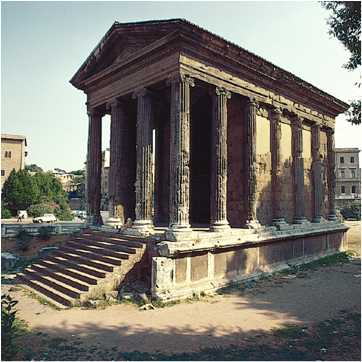
•Combines Greek andEtruscan elements to make adistinctively Roman style
•Etruscan influence: it sits atopa high podium, has stairs onlyin the front and a single, deepporch
•Greek influence: it hasfreestanding Ionic columnsthat support an Ionic frieze andpediment, and a single cella
Republican Rome (100 BCE)
134
Figure 10-7 Headof a Romanpatrician, fromOtricoli, Italy, ca.75–50 BCE.Marble, approx. 1’2” high. MuseoTorlonia, Rome.

•The Romans knew about the idealized portraits ofthe Greeks, but during the time of The Republic,Romans preferred veristic or superrealistic portraits
•Roman sculptors often used death masks to createportraits of the head, neck and shoulders called busts
•As confident, experienced rulers of Rome in itsrising power, they valued gravitas, or weightiness
•Serious minded Romans honored strength overbeauty, power more than grace, and steadiness morethan quickness of mind
Republican Rome (100 BCE)
135
Figure 10-16 Second Style wall paintings (general view and detail of tholos) fromCubiculum M of the Villa of Publius Fannius Synistor, Boscoreale, Italy, ca. 50–40 BCE.Approx. 8’ 9” high. Metropolitan Museum of Art, New York.


Republican Rome (100 BCE)
136
Figure 10-23 Portrait of a husband and wife,wall painting from House VII,2,6, Pompeii,Italy, ca. 70–79 CE. Approx. 1’ 11” x 1’ 81/2”. Museo Nazionale, Naples.

Republican Rome (100 BCE)
•Illusionism: creating the“illusion” of three dimensionalspace
137
Imperial Rome (200 CE)
Augustus
Augustus 27-14

138
Figure 10-25 Portrait of Augustus as general, fromPrimaporta, Italy, copy of a bronze original of ca. 20BCE. Marble, 6’ 8” high. Vatican Museums, Rome.

•Rome began as a collection of huts on a hillbeside the Tiber River
•By the middle of the first century BCE, theRoman Empire was even larger than that ofAlexander’s
•Disgruntled senators assassinated JuliusCeasar on the Ides of March, 44 BCE
•plunged into civil war for 13 years
Imperial Rome (200 CE)
Augustus
139
Figure 10-25 Portrait of Augustus as general,from Primaporta, Italy, copy of a bronze originalof ca. 20 BCE. Marble, 6’ 8” high. VaticanMuseums, Rome.


Figure 5-38 POLYKLEITOS, Doryphoros(Spear Bearer). Roman marble copy fromPompeii, Italy, after a bronze original of ca.450–440 BCE, 6’ 11” high. Museo Nazionale,Naples.
140
Figure 10-27 Ara Pacis Augustae(Altar of Augustan Peace), Rome,Italy, 13–9 BCE. (View from thesouthwest).

•The Ara Pacis also demonstrateshis use of art as imperialpropaganda
•Commissioned by the senate, thealtar celebrates Augustus’s role as aleader who brought Rome theblessings of peace and prosperity
•It is well known for its beautifullycarved low relief sculptures
Imperial Rome (200 CE)
Augustus
141
Figure 10-29 Procession of the imperial family, detail of the south friezeof the Ara Pacis Augustae, Rome, Italy, 13–9 BCE. Marble, approx. 5’ 3”high.

Augustus
•This is a procession of the royalfamily
•Clearly inspired by thePanathenaic procession frieze onthe Greek Parthenon
•He wanted to be equal toPericles and his Golden Age ofAthens
Imperial Rome (200 CE)
142
Figure 10-30 Maison Carrée, Nîmes,France, ca. 1–10 CE.

Imperial Rome (200 CE)
•Augustan Neo-Classicalarchitectural style…
•This in in Gaul, or France, in aregion called Provence, it wasRome’s first province…
•Can you name the Greekelements?
•How about the Etruscanfeatures?
Augustus
143
Figure 10-31 Pont-du-Gard, Nîmes, France, ca. 16 BCE.

•“Will anybody compare the idle pyramids, or those other uselessthough renowned works of the Greeks, with these aquaducts, theseindispensable structures?” ---a Roman engineer
Imperial Rome (200 CE)
Augustus
144
Imperial Rome (200 CE)
Nero

Nero 54-68 CE
145
Figure 10-33 SEVERUS and CELER,plan (above) and section (below) of theoctagonal hall of the Domus Aurea(Golden House) of Nero, Rome, Italy,64–68 CE.

Imperial Rome (200 CE)
•In 64 CE a massive fire destroyedmuch of the city of Rome
•Emperor Nero took advantage ofthis in constructing a grand homefor himself, the “Domus Aurea”
•This move made Nero veryunpopular with the Romanpeople…
Nero
146
Imperial Rome (200 CE)
Vespasian
Vespasian 69-79 CE
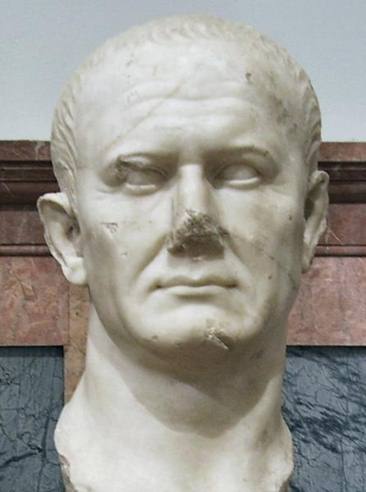
147
Figure 10-34a Colosseum(Flavian Amphitheater), Rome,Italy, ca. 70–80 CE.

•Nero was forced tocommit suicide
•After a year of civilstrife, Vespasian (whosefamily name was Flavius)took power
•He had 2 sons, Titus andDomitian…
Imperial Rome (200 CE)
Vespasian
148
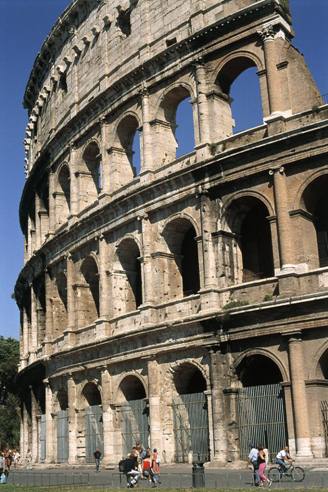
•The 159 ft curving outer wallconsists of 3 levels of archesculminating in a fourth levelattic, or top story
•The arches on each level areframed by a distinctive pair ofthree-quarter engaged columns
•They are stacked in a hierarchyof orders…
Imperial Rome (200 CE)
Vespasian
149
Imperial Rome (200 CE)
Titus
Titus 79-81

150
Figure 10-37 Arch ofTitus, Rome, Italy, after 81CE.

•In the 2nd centuryCE, Rome had morethan 30 triumphalarches
•These freestandingmonumentscommemoratednotable imperialstriumphs
Imperial Rome (200 CE)
Titus
151
Figure 10-38 Spoils of Jerusalem, relief panel from the Arch of Titus,Rome, Italy, after 81 CE. Marble, approx. 7’ 10” high.

•A line of Roman soilders carrying the sacred menorah taken from thetemple in Jerusalem
Imperial Rome (200 CE)
Titus
152
Imperial Rome (200 CE)
Trajan
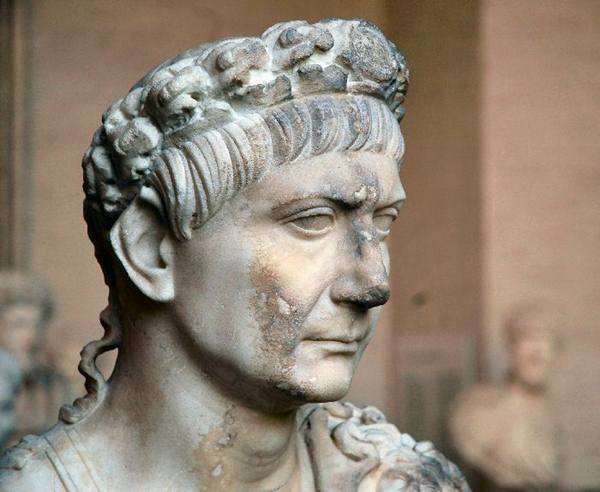
Trajan
98-117 CE
153
Figure 10-42 Column of Trajan, Forum of Trajan, Rome,Italy, dedicated 112 CE.

•About 40 years after Titus conquered Jerusalem,Emperor Trajan (89-117 CE) defeated the Dacians(modern day Romania)
•Trajan commemorated his victory bycommissioning a 125 ft tall column
•A statue of the emperor once adorned the top of ofthe column, and his cremated remains were placedinside a golden urn at the base
Imperial Rome (200 CE)
Trajan
154
Figure 10-41 Apollodorus of Damascus, model of Forum ofTrajan, Rome, Italy, dedicated 112 CE. Reconstruction byJames E. Packer and John Burge. 1) Temple of Trajan, 2)Column of Trajan, 3) Libraries, 4) Basilica Ulpia, 5) Forum,6) Equestrian statue of Trajan.

Imperial Rome (200 CE)
Trajan
Forum: open courtyards surrounded by colonnades and an exedra onboth sides, with a Roman temple at one end
Exedra: a semicircular portico which served as an outdoor meeting area
Portico: a porch with a roof structure supported by columns or enclosedby walls
5
155
Figure 10-43 APOLLODORUS OF DAMASCUS, aerial view of Markets of Trajan,Rome, Italy, ca. 100–112 CE.

Imperial Rome (200 CE)
Trajan
Arcade: a succession ofarches, eachcounterthrusting the next,supported by columns orpiers, or a covered walkenclosed by a line of sucharches on one or both sides.
156
Imperial Rome (200 CE)
Hadrian
Hadrian 117-138
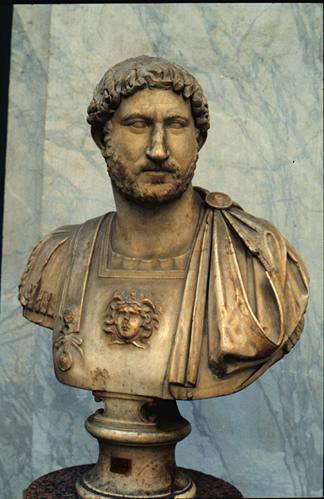
157
Figure 10-47 Portrait bust of Hadrian asgeneral, from Tel Shalem, Israel, ca. 130–138 CE. Bronze, approx. 2’ 11” high.Israel Museum, Jerusalem.

Imperial Rome (200 CE)
•Hadrian erected the Pantheonto serve as a temple to all (pan)the gods (theoi)
•Its revolutionary design andawe-inspiring interior has madeit one of the most influentialbuildings in architectural history
Hadrian
158
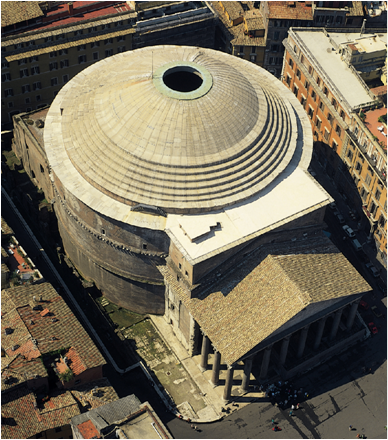
Figure 10-48 Aerial view of the Pantheon, Rome, Italy, 118–125 CE.
Imperial Rome (200 CE)
•The Pantheonrevolutionized building bycombining a portico with adomed rotunda
•This basic designinfluenced Renaissance andNeoclassical architects
•It was also revolutionarybecause it was the largestinterior space in the ancientworld
Hadrian
159
Figure 10-50 Interior of the Pantheon,Rome, Italy, 118–125 CE.

Imperial Rome (200 CE)
•After entering through the giantbronze doors, visitors see:
•A 142 ft high concrete domecovering a 142 ft wide sphericalfloor
•The dome symbolized the vault ofthe heavens protecting the orb ofthe earth
•The oculus has a diameter of 29 ft,allowing in light and rain
Hadrian
160
Imperial Rome (200 CE)
Marcus Aurelius 161-180
Marcus Aurelius

161
Figure 10-59 Equestrian statue of MarcusAurelius, from Rome, Italy, ca. 175 CE.Bronze, approx. 11’ 6” high. Musei Capitolini,Rome.

•This larger than life statueportrays Emperor Marcus Aureliussitting calmly on a Spanish warsteed
•The horses foot may have oncehave been raised above an enemy
•His arm extends in a peacefulgesture suggesting clemency forthe defeated adversary
Imperial Rome (200 CE)
Marcus Aurelius
162
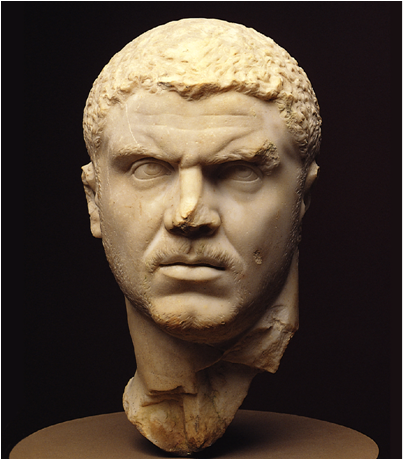
Figure 10-65 Portrait of Caracalla, ca.211–217 CE. Marble, approx. 1’ 2”high. Metropolitan Museum of Art,New York.
Imperial Rome (200 CE)
Caracalla
Caracalla 211-217
163
Figure 10-64Painted portrait ofSeptimius Severusand his family, fromEgypt, ca. 200 CE.Tempera on wood,approx. 1’ 2”diameter. StaatlicheMuseen, Berlin.

Imperial Rome (200 CE)
Caracalla
164
Figure 10-68 Reconstructiondrawing of the central hall(frigidarium) of the Baths ofCaracalla, Rome, Italy, 212–216CE.

Imperial Rome (200 CE)
Baths: a large complex ofbaths(cold, warm and hot)as well as exercise rooms(palaestras), swimmingpools, lecture halls, andlandscaped gardens builton a massive scale…
Caracalla
165
Figure 10-67 Plan of the central section ofthe Baths of Caracalla, Rome, Italy, 212–216CE. 1) Natatio, 2) Frigidarium, 3)Tepidarium, 4) Caldarium, 5) Palaestra.The bathing, swimming, and exercise areaswere surrounded by landscaped gardens,lecture halls, and other rooms, all enclosedwithin a great concrete perimeter wall.

Imperial Rome (200 CE)
Frigidarium: where cold plungebaths were taken after the hotbaths
Tepidarium: the warm roomwhere a patron would preparethemselves for the calidarium
Caldarium: Hot air was piped intothe floors and walls, and hot waterfor the hot tubs was piped from alarge tank or cauldron in thefurnace room…
Caracalla
166
Diocletian 284-305
Imperial Rome (200 CE)
Diocletian

167
Figure 10-74 Portraits of the fourtetrarchs, from Constantinople, ca.305 CE. Porphyry, approx. 4’ 3” high.Saint Mark’s, Venice.
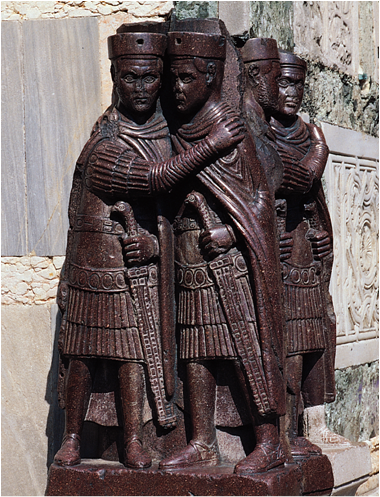
Diocletian and the Tetrarchy
•The Pax Romana was thezenith of Roman power, anda long process of declinebegan during the 3rdcentury…
•This century saw a series ofeconomic disruption,military defeats and politicalupheavals
Imperial Rome (200 CE)
168
Imperial Rome (200 CE)
Constantine
Constantine 312-337

169
Figure 10-78 Portrait of Constantine,from the Basilica Nova, Rome, Italy, ca.315–330 CE. Marble, approx. 8’ 6” high.Palazzo dei Conservatori, Rome.

Constantine the Great
•The tetrarchs did not lastlong… within a few yearsConstantine, a brilliant, youngmilitary commander tookcharge in 312 CE
•Constantine invaded Italy,finding Rome defended by aformidable army…
Imperial Rome (200 CE)
170
Figure 10-76 Arch of Constantine,Rome, Italy, 312–315 CE (southside).

•He promptly erected a hugetriple, triumphal arch tocommemorate his militaryvictories…
•This arch includes sculpturestaken from earlier monumentshonoring Trajan, Hadrian, andMarcus Aurelius
•In some cases, sculptors cut offthe heads of predecessors andreplaced them with Constantine’simage
•This juxtaposition may havebeen intended to visuallyassociate Constantine with thevirtues of the great emperorsduring the Pax Romana
Imperial Rome (200 CE)
Constantine the Great
171
Figure 10-77 Distribution of largess,detail of the north frieze of the Arch ofConstantine, Rome, Italy, 312–315 CE.Marble, approx. 3’ 4” high.

•Constantine’s reign (312-337 CE)marked the end of Rome’s position asthe capital of a great empire
•In 330 CE he founded the “NewRome” on the site of Byzantium,renaming the city Constantinople, orthe city of Constantine…
•It became the captial of theByzantine Empire… WhileConstantinople flourished, Romefaltered and fell…
•In 410 CE the Vandalsbreached Rome’s walls
•The Western Roman Empirecollapsed in 476 CE, a shadowof its past…
Imperial Rome (200 CE)
Early Christian(Late Antiquity)
172
Key Date: 4th C
173
Figure 11-3 The Good Shepherd, the story of Jonah, painted ceiling of acubiculum in the Catacomb of Saints Peter and Marcellinus, Rome, Italy,early fourth century.
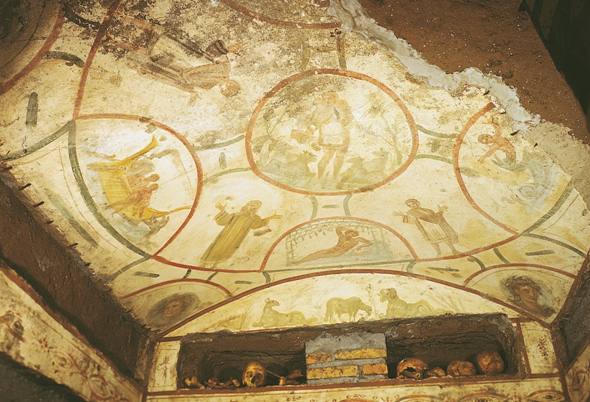
Late Antiquity (4th century CE)
174
Figure 11-5 Sarcophagus ofJunius Bassus, from Rome,Italy, ca. 359. Marble, 3’ 10 1/2”X 8’. Museo Storico del Tesorodella Basilica di San Pietro,Rome.
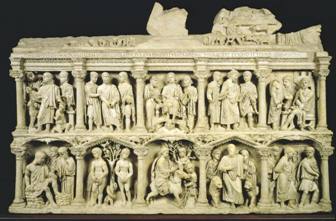
•Janius Bassus was a Christian
convert and a prefect (high rankingofficial) of Rome
•As per the tradition of the time,
He was baptized right before he died
•3 sides decorated with late Romanstyle carvings depicting Old and NewTestament stories
•Use of pre-figuration symbolism
•2 registers with 5 compartments, orniches
Late Antiquity (4th century CE)
175
Figure 11-8 Interior of Santa Sabina, Rome, Italy, 422–432.

Clerestory - a row of windows
Late Antiquity (4th century CE)
•Like Old St.Peter’s, this isan example ofan EarlyChristianBasilica Planchurch…
•Sometimescalled alongitudinalplan
176
Figure 11-9 Interior of Santa Costanza, Rome, Italy, ca. 337–351.

•Basilica stylebuildings werenot the onlystyle forchurches
•Centrallyplannedbuildings werealso made…
Late Antiquity (4th century CE)
177
Figure 11-15 Christ as the Good Shepherd, mosaic from the entrance wallof the Mausoleum of Galla Placidia, Ravenna, Italy, ca. 425.

Late Antiquity (4th century CE)
178
Figure 11-17 Miracle of the loaves andfishes, mosaic from the top register ofthe nave wall of Sant’Apollinare Nuovo,Ravenna, Italy, ca. 504.

Late Antiquity (4th century CE)

Figure 11-15 Christ as the GoodShepherd, mosaic from the entrance wall ofthe Mausoleum of Galla Placidia, Ravenna,Italy, ca. 425.
Classical Style
Byzantine Style
Byzantine
179
Key date 6th C CE: the time of Justinian
(Iconoclasm was 8th and 9th C CE)
180
Figure 12-1 Justinian as worldconqueror (Barberini Ivory), mid-sixthcentury. Ivory, 1’ 1 1/2” X 10 1/2”.Louvre, Paris.

Justinian 527 - 565
Byzantium (550 CE) 6th Century
•Justinian expanded the Empire
•Made Orthodox Christianity the onlyreligion of the Byzantine Empire
•Combined the roles of Caesar and Pope
•Created a theocratic state
181
•Hagia Sophia
•San Vitale.


Constantinople
Revenna
Byzantium (550 CE) 6th Century
182

Hagia Sophia means holy wisdom
Was at first a church…
Then a mosque during the
reign of the Ottoman Turks…
(1453)
Is a museum today.
Original dome collapsed in 558
108 ft. diameter, 180 ft high
Light = G-d.
40 windows around base of dome
Byzantium (550 CE) 6th Century
183
Pendentive
A concave, triangular section of ahemisphere, four of which provide thetransition from a square area to the circularbase of a covering dome. Althoughpendentives appear to be hanging (pendant)from the dome, they in fact support it.
Pendentives, or dome supports, enabled Byzantine architects to
construct the dome for the Hagia Sophia.
Byzantium (550 CE) 6th Century

184
Figure 12-5 ANTHEMIUS OFTRALLES and ISIDORUS OFMILETUS, interior of Hagia Sophia(view facing southwest),Constantinople (Istanbul), Turkey,532–537.
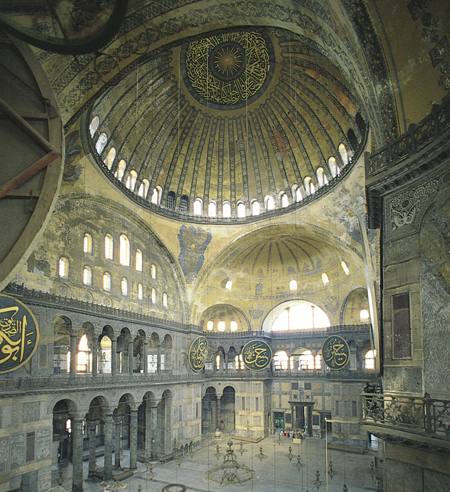
•Pendentives made theunion of central planand basilica structurespossible
•a domed basilica!
•spectacular light!
Byzantium (550 CE) 6th Century
185
Figure 12-6 Aerial view of San Vitale,Ravenna, Italy, 526–547.

•Revenna’s most
incredible
building…
•central plan
•Sacred fortress
Of Byzantium
Byzantium (550 CE) 6th Century
186
Figure 12-8 Interior of San Vitale (view from the apse into the choir), Ravenna, Italy,526–547.

full of gold
Byzantine
187
Byzantine Art Basics: 3 F’s and a G
FLAT - although there is some shaping, figures appear flat,lacking the naturalistic volume common in Classical Art
FLOATING - figures hover above the ground, Classical artemphasized mass and firm footing…
FRONTAL - unlike naturalistic overlapping as seen in Classicalart, Byzantine figures face the viewer in a planar format
GOLD - gold backgrounds are depthless and convey thespirituality of Christianity… focus is on teachings and importantfigures, not representing the natural world….
188
Figure 12-10 Justinian, Bishop Maximianus, and attendants, mosaicfrom the north wall of the apse, San Vitale, Ravenna, Italy, ca. 547.

Byzantine figures…
•flat and stiff
•symmetrically placed
•seem to float, like they are
hung from pegs…
•perspective and volume are
not important to these artists
•tall and slim with almond shaped faces
•expressionless gazes which stare out straight ahead…
•no sense of motion, still, calm, solemn
Early Byzantine
Maximus=bishop Justinian=emperoer
189
•used opaque, marble cubes
•surface had a smooth, flatfinish
•colors limited due to use ofnatural stone
•founds usually on floors ofprivate homes
•subjects were secular
•used tiny pieces for greatdetail
•background was landscape
Byzantine mosaics…
used reflective glass cubes
surfaces left uneven so work
sparkled
glowing glass in a wide array
of colors
found in walls and ceilings
church domes and apses
subjects were religious
large cubes in stylized designs
background was usually abstract
usually gold
Roman mosaics…
190
Figure 10-55 Neptune andcreatures of the sea, floormosaic in the Baths of Neptune,Ostia, Italy, ca. 140 CE.

A Roman mosaic…
191
Figure 12-11 Theodora and attendants, mosaic from the south wall of theapse, San Vitale, Ravenna, Italy, ca. 547.

Byzantine mosaics…
192
Figure 12-16 Virgin (Theotokos)and Child between SaintsTheodore and George, icon, sixthor early seventh century.Encaustic on wood, 2’ 3” X 1’ 73/8”. Monastery of SaintCatherine, Mount Sinai, Egypt.

Early Byzantine
Icons - images of holy figurespainted on wooden panels.
Earlier icons are usuallyencaustic, and later ones aremore often tempera
Tempera- pigment suspendedin egg yolk
193
•icons – small portable paintings of Christ, Mary or theSaints
•iconoclasm – destruction of icons
•iconclasts – breakers of icons
•iconophiles – lovers of icons
Iconoclasm (726 – 843)
Byzantine Art
194
Figure 12-29 Virgin (Theotokos)and Child, icon (Vladimir Virgin),late eleventh to early twelfthcentury. Tempera on wood,original panel approx. 2’ 6 1/2” X1’ 9”. Tretyakov Gallery, Moscow.

Byzantine
195
Figure 12-26 Christ enthroned withsaints (Harbaville Triptych), ca. 950.Ivory, central panel. Louvre, Paris.

Ivory Religious Art
diptychs (two paneled) andtriptychs (three paneled):portable shrines
post-iconoclastic triptych
trumps the diptych in ivory
luxury arts
often replaced icons for the
very rich
Byzantine style in ivory…
196
Figure 12-21 Christ as Pantokrator, dome mosaic in theChurch of the Dormition, Daphni, Greece, ca. 1090–1100.

Pantokrator= ruler of all or almighty in Greek
It is high in the church, connects viewer with heaventhrough Christ
Pantokrator is a theme in Byz. Art..
No limitation to God’s power and eternal love
IC XC = christogram
Stern expression… warning of the final judgement
Byzantine
197
Figure 12-13 Transfiguration of Jesus, apsemosaic, Church of the Virgin, monastery ofSaint Catherine, Mount Sinai, Egypt, ca.548–565.
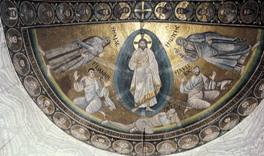
Transfiguration: the supernatural and glorified change in theappearance of Jesus on Mount Tabor in Isreal. Matt. 17:1–9.
Monastery of Saint Catherine: it is one of the greatest repositories forByzantine icons… it was a remote location, and folks there were noticonoclasts… so great icons survived!
Mount Siniai: where G-d appeared to Moses as a burning bush (at thebase) and gave him the Ten Commandments (at the top)
Byzantine
Islamic
198
Key Dates:
Dome of the Rock… 7th C
The Mosque of Cordoba… 9th C
199
Muslims are those who submit to Allah
•five obligations (The Five Pillars that bind all Muslims)
1.profession of faith in the one god, Allah
2.worship five times daily, facing Mecca
3.give to the poor… 2%
4.fast during Ramadan
5.go to Mecca at least once in a lifetime if you can, hajj
***Islamic Art in sacred spaces absolutely CAN NOT pictureanimals or people!!!
Islamic Art
200
Kaaba: a black stone building in Mecca that is shaped like a cube andthat is the most sacred Muslim pilgrim shrine; believed to have beengiven by Gabriel to Abraham; Muslims turn in its direction when praying

The Kaaba
Islamic Art
201
Figure 13-16 Koran pagewith beginning of surah 18,al-Kahf (The Cave), ninth orearly tenth century. Ink andgold on vellum, 7 1/4” x 101/4”. Chester Beatty Libraryand Oriental Art Gallery,Dublin.

The Koran
•calligraphy was a sacred task
•the scribe had to be pure in his soul
•Kufic is an early Arabic script,veryangular
•consonants only, no vowels are written
•Hebrew and other Semitic languages arelike
Islamic Art
202
Figure 13-1 Dome of theRock, Jerusalem, 687–692.

•NOT a mosque
•It is a pilgrimage site
•It is an architectural tribute to the triumphof Islam… it dominates the skyline…
•marked the coming of a new religion to acity considered sacred by Christian and Jews
•It is built over a sacred stone
Dome of the Rock (7th C)
Islamic Art
203
Figure 13-2 Interior ofthe Dome of the Rock,Jerusalem, 687–692.

•Adam’s burial
•Abraham’s preparation
for Isaac’s sacrifice
•Temple of Solomon andTemple of Herod
•The Rock from which
Mohammad ascended
into heaven
Dome of the Rock (7th C)
Islamic Art
204
Figure 13-1 Dome of theRock, Jerusalem, 687–692.
Dome of the Rock (7th C)
•The Dome of the Rock is also built right ontop of the Temple Mount
•Temple Mount: Originally, it was the site ofthe great Temples of Jerusalem, the holiestplace in Judaism.
•For Muslims, it is the site of the ProphetMuhammad's journey to heaven described inthe Qur'an.
•Finally, Christians revere it as a placefrequently visited by Jesus and some believeit will play a major role in end-time events.

Islamic Art
205
Figure 13-1 Dome of theRock, Jerusalem, 687–692.
Dome of the Rock (7th C)
•The Temple Mount includes a famoussection known as the Western Wall:
•The Western Wall:The only part ofthe Jewish Temple in Jerusalem whichremains today.
•It is a place of pilgrimage and prayer.
•Many Jews write petitions or prayersaddressed to God on pieces of paperwhich they place in cracks in the wall
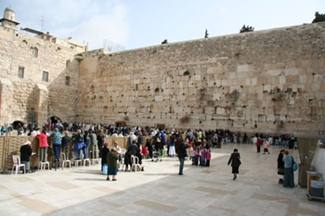
Islamic Art
206
Figure 13-8 Plan of theGreat Mosque, Kairouan, Tunisia, ca. 836–875.


Islamic Art
207
Figure 13-11 Prayer hall of the Great Mosque, Córdoba, Spain, eighth totenth centuries.

hypostyle hall – communal worship hall, roof held up by many
columns
Umayyad Cordoba
Arabs overthrew the
Christian Visigoths
In 711… lasted 3C
Stylistic unity
Double tiered arches
Cordoba 9th C
Islamic Art
208
Figure 13-12 Maqsura of the GreatMosque, Córdoba, Spain, 961–965.

…reserved for rulers
Special entrance…
In the West,
horseshoe
shaped arches
quickly became
associated with
Islamic
architecture.
Islamic Art
209
Figure 13-13 Dome in front ofthe mihrab of the Great Mosque,Córdoba, Spain, 961–965.

arcuated squinches
criss-cross ribs
two squares set at 45 degree
angles
Covers the area in front of the
Mihrab qibla
made by Byzantine artists
Islamic Art
210

© 2005 Saskia Cultural Documentation, Ltd.

Islamic Art
211
Figure 13-22 SINAN, interiorof the Mosque of Selim II,Edirne, Turkey, 1568–1575.


Islamic Art
212
Figure 13-25 Mihrab from theMadrasa Imami, Isfahan, Iran, ca.1354. Glazed mosaic tilework, 11’3” X 7’ 6”. Metropolitan Museumof Art, New York.

The aesthetic union between
calligraphy and arabesque
ornament
Kufic in center
Muhaqqaq around perimeter
Islamic Art
Early Medieval
213
Key Dates:
650 CE (7th C) : Anglo-Saxon
750 CE (8th C) : Hiberno-Saxon
800 CE (9th C) : Carolingian
950 CE (10th C) : Viking
1000 CE (11th C) : Ottonian
214
Figure 16-2 Purse cover, fromthe Sutton Hoo ship burial inSuffolk, England, ca. 625. Gold,glass, and enamel cloisonné withgarnets and emeralds, 7 1/2”long. British Museum, London.

•Unearthed from a hill in Sutton Hoo,England in 1939
•This was a cover for a leather changepurse
•The wood of the ship was gone, but theimprint and some precious treasureremained
•Many abstract designs based onanimals
Anglo-Saxon (650 CE ) 7th C
215
Figure 16-6 Cross and carpet page, folio 26 verso of the LindisfarneGospels, from Northumbria, England, ca. 698–721. Tempera on vellum, 1’1 1/2” X 9 1/4”. British Library, London.

•The intricate interlacing covering theentire page looks like a carpet, hence theterm carpet page
•Look closely, there are abstract animalforms twisting around, some even bitingthe ribbons
•The cross and border bring order…
Hiberno-Saxon (750 CE) 8th C
216
Figure 16-8 Chi-rho-iota page, folio 34 recto of the Book of Kells,probably from Iona, Scotland, late eighth or early ninth century. Temperaon vellum, 1’ 1” X 9 1/2”. Trinity College Library, Dublin.

“Now this is how the birth ofChrist came about.”
The Book of Kells has 680
Pages, only 2 of which are notilluminated… wow
Hiberno-Saxon (750 CE) 8th C
217
Figure 16-11 Equestrian portrait of Charlemagne or Charles the Bald,from Metz, France, ninth century. Bronze, originally gilt, 9 1/2” high.Louvre, Paris.

•The Holy Roman Emperor
•The Frankish Kingdom
(France, Germany a little Spainand 2/3s of Italy…)
•Constantine wannabe
•The Carolingian Renaissance
Carolingian (800-814 CE) 9th C
218
•Figure 16-12 Saint Matthew, folio 15 recto of the Coronation Gospels (Gospel Book ofCharlemagne), from Aachen, Germany, ca. 800–810. Ink and tempera on vellum, 1’ 3/4”X 10”. Schatzkammer, Kunsthistorisches Museum, Vienna.

•The CoronationGospels wasCharlemagne’s personalcopy of the Gospels
•So many Classicalqualities…
•Write, Mathew, write!
Carolingian (800-814 CE) 9th C
219
Figure 16-13 Saint Matthew, folio 18 verso of the Ebbo Gospels (GospelBook of Archbishop Ebbo of Reims), from Hautvillers (near Reims),France, ca. 816–835. Ink and tempera on vellum, 10 1/4” X 8 3/4”.Bibliothèque Municipale, Épernay.

Although artists exhibitedregional differences, theobjective was the same:create beautiful illuminatedmanuscripts.
Carolingian (800-814 CE) 9th C
220
Figure 16-17 Interior of the Palatine Chapel of Charlemagne, Aachen,Germany, 792–805.

•Roman revival, yet, centrally planned andbased on San Vitale in Ravenna
•Theodoric, the first Germanic King of aRoman city, ruled over Ravenna
•This chapel is a bit more simplified andvisually sturdy than San Vitale
•Charlemagne is buried here
•“Classical Revival”
Carolingian (800-814 CE) 9th C
221

•The interior of the chapel incorporatessignificant Roman architectural motifs
•Lower level is supported by thick piersand round arches
•Upper galleries contain piers, Corinthiancolumns and arches
•The chapel is capped with a dome,making it the first medieval vaultedbuilding in Western Europe
•Revive the glory of ancient Rome, yetreinforce Charlemagne’s devotion toChristianity
Carolingian (800-814 CE) 9th C
222
Figure 16-3 Animal-head post, from the Oseberg, Norway, ship burial, ca.825. Wood, head approx. 5” high. Vikingskipshuset, Oslo.

Viking Art (950 CE ) 10th C
•Viking Art is most noted forbeautiful wooden carvings…
•Like Anglo-Saxon andHiberno-Saxon Art, it sharesthe characteristics ofinterlacing andzoomorphism…
223
Figure 16-22 Saint Michael’s,Hildesheim, Germany, 1001–1031.

•Commissioned by BishopBernward, tutor
to Otto the III and prominent patronof art
•Carolingian basilica with awestwork façade, but it has doubletransepts
Ottonian (1000 CE) 11th C
224
Figure 16-24 Doors with relief panels(Genesis, left door; life of Christ, right door),commissioned by Bishop Bernward for SaintMichael’s, Hildesheim, Germany, 1015.Bronze, 16’ 6” high. Saint Michael’s,Hildesheim.
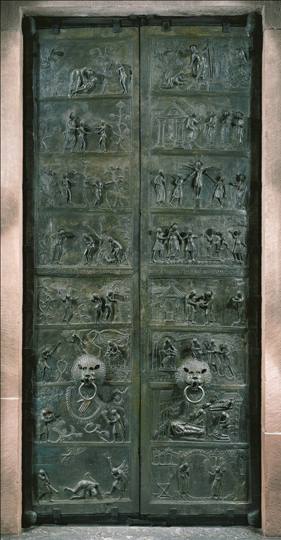
•Bishop Bernward might have beeninfluenced by a visit to Santa SabinaChurch in Rome, which has gorgeouscarved wooden doors…
•These are 16 ft. tall and solid bronze
Ottonian (1000 CE) 11th C
225
Figure 16-25 Column with reliefs illustrating thelife of Christ, commissioned by Bishop Bernwardfor Saint Michael’s, Hildesheim, Germany, ca.1015–1022. Bronze, 12’ 6” tall. Saint Michael’s,Hildesheim.

•Instead of detailing the victories of aRoman general, Bernward had a columnmade with a continuous narration of thelife of Christ and his triumph over death.
•Bishop Bernward liked Roman art…
Ottonian (1000 CE) 11th C
226
Figure 16-26 Crucifixcommissioned by Archbishop Gerofor Cologne Cathedral, Germany, ca.970. Painted wood, height of figure6’ 2”.

The Gero Crucifix
Life size… Bam!!!
A visual confrontation withChrist’s suffering
An un-idealized picture ofagony
Ottonian (1000 CE) 11th C
227
Figure 16-29 Otto III enthroned,folio 24 recto of the Gospel Book ofOtto III, from Reichenau, Germany,997–1000. Tempera on vellum, 1’ 1”x 9 3/8”. Bayerische Staatsbibliothek,Munich.

This work of art
Should remind you of
Someone we studied
Before…
Who?
Why?
Ottonian (1000 CE) 11th C
228
Figure 16-29 Otto III enthroned,folio 24 recto of the Gospel Book ofOtto III, from Reichenau, Germany,997–1000. Tempera on vellum, 1’ 1”x 9 3/8”. Bayerische Staatsbibliothek,Munich.
Ottonian (1000 CE) 11th C

Romanesque
229
12th C
The Age of Pilgrimages
230
Romanesque Conclusion
•Romanesque style flourished in Western Europe between 1000 and 1150
•The design of churches during the period was a practical response to thephenomenon of pilgrimages
•Because pilgrims journeyed to visit sacred relics at holy sites, churcheswere built to house relics and to accommodate pilgrims, as well as toprovide a space for worship
•The form of the church was primarily cruciform, continuing thetradition established by architects of basilicas built in the Carolingianperiod of the ninth century
231
Romanesque Conclusion
•Stone replaces wood for roofs, and despite some regional differences,most Romanesque churches have barrel-vaulted naves with round archesand elaborately decorated portals
•This period marks the reemergence of of exterior sculptural decorationsince Rome
•Ambulatories were incorporated into church designs to accommodatepilgrims
232
Figure 17-4 Aerial view (from the southeast) of Saint-Sernin, Toulouse, France, ca. 1070–1120.

Romanesque- 12th C
233
Figure 17-6 Plan of Saint-Sernin,Toulouse, France, ca. 1070–1120.

Saint-Sernin is a paradigmof Romanesque architecture
•Lengthened nave
•Doubled aisles
•Transept
•Cruciform
•Crossing square
•Ambulatory
•Chapels
•Nave Bay
•Bay
Romanesque- 12th C
234
Figure 17-4 Exterior view, DetailCloser view of the chevet, from E
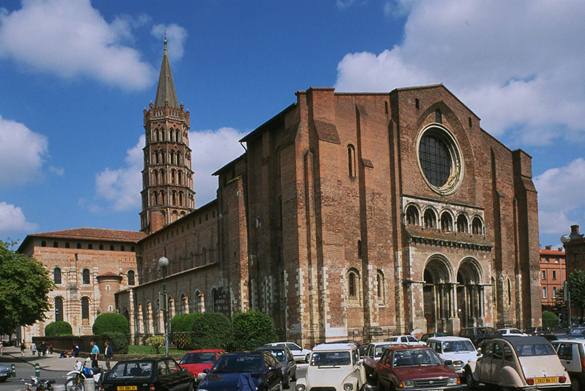
Small windows, round arches and heavy,thick walls are all hallmarks ofRomanesque design.
Romanesque- 12th C
235
Figure 17-6 Interior of Saint-Sernin,Toulouse, France, ca. 1070–1120.Interior: general view of the nave, from W
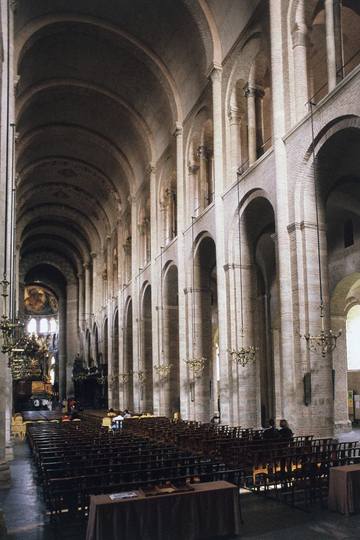
•A stone barrel vault supports thenave with transverse ribs shapedlike round arches (bye bye flat,wooden, fire hazard roof action!)
•The nave arcade separates thenave from the side aisles
•The nave elevation consists of twolevels, the nave arcade and thetribune, which accommodated extravisitors on holidays
Romanesque- 12th C
236
Figure 17-13 Interior of Saint-Étienne,Caen, France, vaulted ca. 1115–1120.

Saint-Etienne is a bit of a rebel withits ribbed, sexpartite vaults insteadof barrel vaults, but it is stillRomanesque, nevertheless…
Romanesque- 12th C
237
Figure 17-15 Interior of DurhamCathedral, England, begun ca.1093.

Another slight rebel, theDurham Cathedral, has ribbedgroin vaults with pointedarches instead of barrel vaults.This allowed for slightly largerwindows in the clerestory…this place is pretty bright forRomanesque.
Note how the nave arcade hasround arches and columns,distinctly Romanesquefeatures.
Romanesque- 12th C
238
Figure 17-17 Detail, PisacomplexDetail view of Baptistery

The ground level is Romanesque (multiplearcaded galleries of round arches andcolumns), but the 2nd floor also has aGothic style tracery and pinnacles.
This building is the perfect example of howconstruction and modification ofRomanesque structures continued into theGothic period.
Romanesque- 12th C
239
Figure 17-18 Baptistery ofSan Giovanni, Florence, Italy,dedicated 1059.

Florentine Romanesque
Architecture
•Though usually associated with15th and 16th century Renaissance,Florence was already an important,independent city-state during theRomanesque period
• it is freestanding, demonstratinghow baptism was of particularimport here… another regionaldistinction
Romanesque- 12th C
240
Figure 17-20 Cloister of Saint-Pierre, Moissac, France, ca. 1100–1115. Limestone withmarble relief panels, piers approx. 6’ high. Cloister: columns of W aisle, view SSW

cloister: a covered walk, esp. in a religious institution, having an openarcade or colonnade usually opening onto a courtyard or garden
Romanesque- 12th C
241
Figure 17-21 BERNARDUSGELDUINUS, Christ in Majesty,relief in the ambulatory of Saint-Sernin, Toulouse, France, ca. 1096.Marble, 4’ 2” high. BERNARDUSGELDUINUS, Christ in Majesty,relief in the ambulatory of Saint-Sernin, Toulouse, France, ca. 1096.Marble, 4’ 2” high.
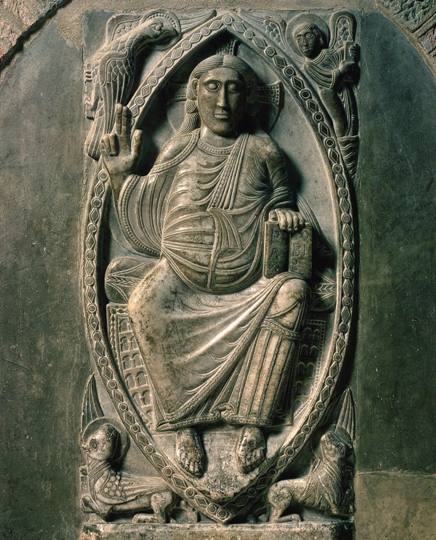
•as in Early Christiansculpture, like sarcophagirelief carving, Christ isoften depicted in amandorla, or an oval oflight
Romanesque- 12th C
242
Figure 17-22 WILIGELMO, creation and temptation of Adam and Eve, frieze on thewest facade, Modena Cathedral, Modena, Italy, ca. 1110. Marble, approx. 3’ high.

•Romanesque sculpture does not resemble Roman sculpture the way thearchitecture does…
•It has a closer affinity to Early Christian sculpture…
Romanesque- 12th C
243
Figure 17-23 South portal ofSaint-Pierre, Moissac, France, ca.1115–1135. Marble, approx. 16’6” wide at base.

Romanesque Portals
A portal is an entrance toa church, it is composedof multiple parts, many ofwhich contain reliefsculpture including;doorjambs, a lintel, atrumeau, a tympanum andmultiple archivolts madeof voissoirs.
244
Figure 17-24 Lions and Old Testamentprophet (Jeremiah or Isaiah?), from thetrumeau of the south portal of Saint-Pierre,Moissac, France, ca. 1115–1130. Marble,approx. life-size.

Romanesque Sculpture
•Another characteristic ofRomanesque sculpture is that itsappearance is tied to thearchitecture of the church.
•The shapes of figures conform tothe architecture of which it is apart.
•Sculpted figures on a trumeautend to be elongated, for example
245
Figure 17-27 DetailChrist in Judgment

Romanesque Sculpture
Tetramorphs: four symbols of theEvangelists, or Gospel writers…
Lion = Mark
Calf = Luke
Man = Mathew
Eagle = John
246
Figure 17-30 Virgin and Child (Morgan Madonna), fromthe Auvergne, France, second half of twelfth century.Painted wood, 2’ 7” high. Metropolitan Museum of Art,New York (gift of J. Pierpont Morgan, 1916).

The Morgan Madonna
•In addition to stone sculpture for churches,small devotional statues and reliquaries wereproduced during the Romanesque period.
•Byzantine influence: Mary as Theotokos,bodies lack naturalism, folds in the clothingare formulaic, following a pattern… though thefaces are more rounded than is typical inByzantine art
•She is also called the Throne of Wisdom,because her lap serves as Christ’s throne.
Romanesque- 12th C
247
Figure 17-31 Head reliquary of SaintAlexander, from Stavelot Abbey,Belgium, 1145. Silver repoussé (partlygilt), gilt bronze, gems, pearls, andenamel, approx. 1’ 5 1/2” high. MuséesRoyaux, Brussels.

•Bernard of Clairvaux was not toofond of this reliquary… “Theyadmire the beautiful more thanthey venerate the sacred…” “[Thechurch] serves the eyes of the richat the expense of the poor.”
•Great example of the stylisticdiversity of Romanesque art:Roman-like head, Byzantine-stylebox…
Romanesque- 12th C
248
Figure 17-32 Christ in Majesty, apsefresco from Santa María de Mur, nearLérida, Spain, mid-twelfth century. 22’ X24’. Museum of Fine Arts, Boston.
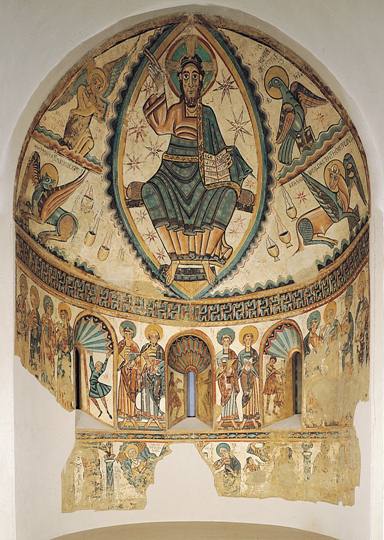
•Romanesque artists preferredpainting on plaster for churchdecorating rather than mosaics
•Romanesque artists continuedthe tradition of painting imposingimages of Christ and the saints inapses
•Tetramorphs and mandorla
•Nave illustrations were usuallyof biblical episodes…
Romanesque- 12th C
249
Figure 17-38 EADWINE THESCRIBE(?), Eadwine the scribe atwork, folio 283 verso of the EadwinePsalter, ca. 1160–1170. Ink andtempera on vellum. Trinity College,Cambridge.

Romanesque ManuscriptIllumination
•Most artists during the Medievalperiod worked anonymously forthe glory of God, but during theRomanesque period, more artistsbegan signing their work
•This is an artist portrait… hemade himself as an evangelist oreven King David, himself…
250
Figure 17-40 Battle of Hastings, detailof the Bayeux Tapestry, from BayeuxCathedral, Bayeux, France, ca. 1070–1080. Embroidered wool on linen, 1’ 8”high (entire length of fabric 229’ 8”).Centre Guillaume le Conquérant,Bayeux.

•The Bayeux Tapestry is NOT a tapestry, technically, it is a length oflinen cloth embroidered with wool thread
•It recounts the Norman conquest of the Anglo-Saxons in England
•The style of the Bayuex Tapestry is similar to illuminated
manuscripts in that the figures are rendered in a flat manner and lackclassical proportions
Romanesque- 12th C
Gothic
•Key Date: 13th C
•The Age of the Great Cathedrals
251
Early Gothic = mid to late 12th C
Early-High Gothic = late 12th C to early 13th C
High Gothic = 13th C
Late Gothic = 14th C
252
Figure 18-1 Ambulatory andradiating chapels, abbey church,Saint-Denis, France, 1140–1144.
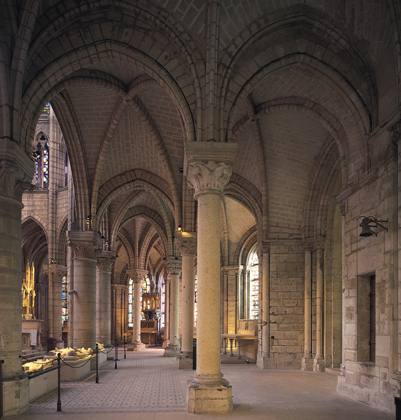
Abbot Suger:
Inventor of the Gothic Style
He wanted to remodel hischurch in a way much differentfrom the Romanesque style…
French Early Gothic
253

According to writings by AbbotSuger, we know he wanted hischurch to be a place of greatphysical beauty, which inspireshope in the beauty of heaven.
This was very different from thefear-inspiring Last Judgment scenesin the tympanums of Romanesquestyle churches.
His first major re-design was in theambulatory, using ribbed vaultswhich were constructed byintersecting pointed arches, asopposed to simpler groin vaults.
French Early Gothic
254
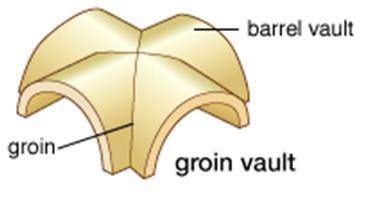

French Early Gothic
255
Figure 18-3 Vaults of the ambulatory and radiating chapels of the choir,abbey church, Saint-Denis, France, 1140–1144.

French Early Gothic
256

Ribbed vaults were used extensively during the Gothic Period, as theyhelped achieve the key goals of Abbot Suger: height and light
According to Suger, greater height alluded more to heaven…worshippers should feel that they are above the muck of the earth, butnot quite in heaven…
•Pointed arches, rather than round arches, open up more space in thechurch interior, and create a greater sense of verticality
•The steeper slope of the pointed arch more directly transfers the weightfrom the roof to the piers than rounded arches… thus the pointed archreduced outward thrust on the walls, making it possible for architectsto make much, much higher, even soaring walls
French Early Gothic
257
•Pointed arches and ribbed vaulting also opened up greater amountsof area for windows
•Abbot Suger believed that beautiful stain-glass windows filtersunlight and provide a multi-colored display of light in the church
•The light enhances the feeling of spirituality Suger sought in churchdesign
•The heavenly light prefigured the “New Jerusalem”, or heaven
•Quite the contrast to the Romanesque periods, eh?
French Early Gothic
258
Figure 18-2 Plan of the east end, abbey church, Saint-Denis, France,1140–1144 (after Sumner Crosby).

French Early Gothic
259
a. Laon (Early) b. Paris (Early-High) c. Chartres (High) d. Amiens (High)

Evolution of the French Gothic Nave Elevation
260
Figure 18-8 Interior ofLaon Cathedral (viewfacing northeast), Laon,France, begun ca. 1190.

French Early Gothic
261
Figure 18-7 West facadeof Laon Cathedral, Laon,France, begun ca. 1190.

French Early Gothic
262
Figure 18-10 Notre-Dame (view from the south), Paris, France, begun1163; nave and flying buttresses, ca. 1180–1200; remodeled after 1225.

French Early-High Gothic
263
Figure 18-4 Aerial view ofChartres Cathedral (fromthe northwest), Chartres,France, begun 1134; rebuiltafter 1194.

Built between the Early andHigh Gothic periods
The original church wasbegun in the Romanesquestyle in 1134, but it burntdown in the Great Fire of1194, only the crypt and apart of the western facade
French High Gothic
264
Western Façade, ChartresCathedral, Chartres, France,begun 1134; rebuilt after 1194.

Check out this westwork: onetower Gothic, one towerRomanesque
The rest of the building withits quadripartite ribbed vaultsand numerous stained-glasswindows is clearly Gothic
Art historians classifyChartres as High Gothic…
French High Gothic
265
Crypt, Chartres Cathedral,Chartres, France, begun 1134;rebuilt after 1194.

The crypt is below the naveelevation, it is essentially avast basement below thechurch…
The purpose of the crypt was to house relics and bodies of deceasedmonks
The chief relic of Chartres was the Virgin’s veil, the head-covering Marywore on the night of Christ’s birth… it survived the fire in the crypt…people saw this as a miracle…
French High Gothic
266
Figure 18-12 Interior of ChartresCathedral (view facing east),Chartres, France, begun 1194.

•Romanesque and Gothic churchesdiffer in their nave elevation, the spacebetween the floor and the vaulting…
•At the lowest level, a Gothic churchhas a nave arcade, just likeRomanesque churches
•It also includes a tribune, or gallery,above the nave arcade for extra seating,similarly to Romanesque churches
French High Gothic
267
Figure 18-12 Interior of ChartresCathedral (view facing east), Chartres,France, begun 1194.

•Gothic architects added a level abovethe gallery, or tribune, called a triforium,which is a band of arcades below thehighest window
French High Gothic
268
Figure 18-12 Interior of ChartresCathedral (view facing east), Chartres,France, begun 1194.
•Early Gothic nave elevation:
1.nave arcade
2.gallery
3.triforium
4.clerestory
•High Gothic elevation:
1.nave arcade
2.triforium
3.Clerestory
(gets rid of the gallery and expands the triforium)
French High Gothic
269
Figure 18-5 Royal Portal, west facade, Chartres Cathedral, Chartres,France, ca. 1145–1155.

The entrance to Chartres at the western façade is famously known as theRoyal Portal…
French High Gothic
270

•The builders of Gothic churches usuallyoriented the structures toward the Holy Landin the East
•The alter and choir, which is special seatingfor the priests, are on the eastern side of thetransept
•The name Royal Portal comes from the sculptures of the Old Testamentkings and queens, the genealogical forerunners of Christ, make up thedoorjamb columns
•The Royal Portal is three portals in one and the theme of each portalreflects the supremacy of Jesus Christ…
French High Gothic
Figure 18-5 Royal Portal, west facade, Chartres Cathedral, Chartres,France, ca. 1145–1155.
271

The portal on the rightdepicts his birth andchildhood…
French High Gothic
Figure 18-5 Royal Portal, west facade,Chartres Cathedral, Chartres, France, ca.1145–1155.
272
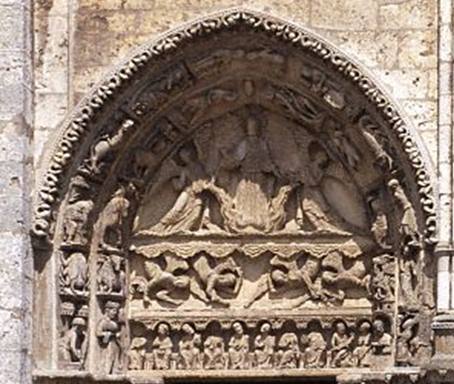
The left tympanumillustrates theResurrection andAscension of Christ…
French High Gothic
Figure 18-5 Royal Portal, west facade,Chartres Cathedral, Chartres, France, ca.1145–1155.
273

•The central tympanumpictures the SecondComing of Christ at theApocalypse, passing finaljudgment on humanity
•Note the mandorla andtetramorphs
•The 12 apostles and 2 OldTestament prophets whoforetold the coming ofChrist populate the lintel
•The archivolts haveworshipping elders…
French High Gothic
Figure 18-5 Royal Portal, west facade,Chartres Cathedral, Chartres, France, ca.1145–1155.
274
Figure 18-11 Plan of ChartresCathedral, Chartres, France, as rebuiltafter 1194 (after Paul Frankl).


French High Gothic
275
Figure 18-13 Virgin and Child and angels (NotreDame de la Belle Verrière), window in the choir ofChartres Cathedral, Chartres, France, ca. 1170,with 13th century side panels. Stained glass, 16’ X 7’X 8”.

•Stained-glass was not a new artform, asEgyptians and Greeks, knew how towork colored glass, and we see stained-glass in churches as ealy as the forthcentury
•Nevertheless, it was during the Gothicperiod that stained-glass became such anintricate form of art that was bothnarrative and decorative
French High Gothic
276
Figure 18-13 Virgin and Child and angels (NotreDame de la Belle Verrière), window in the choir ofChartres Cathedral, Chartres, France, ca. 1170,with 13th century side panels. Stained glass, 16’ X 7’X 8”.

•Chartres has 176 stained-glass windowstotaling approximately 22,000 square feet(half a football field of glass…)
•Lux Nova: “new, heavenly light” thatAbbot Suger wished for in churchinteriors
•Windows were meant to inspire thecongregation to contemplate the beautyand hope of heaven
French High Gothic
277
Figure 18-13 DetailWindow 14 (ca 1170 inserted in a largerwindow of 13th c). Notre Dame de la BelleVerrière or Blue Virgin: 488 cm, upperportion w Blue Virgin

•Remember, the Virgin Mary isincredibly important to Chartres, asher veil was her most holy relic
•This window emphasizes hersignificance… it is also known asOur Lady of the Beautiful Window…
•Nice crown…
French High Gothic
278
Figure 18-14 Rose window and lancets,north transept, Chartres Cathedral,Chartres, France, ca. 1220. Stained glass, rosewindow approx. 43’ in diameter.

•The windows of Chatres cathedralwere all paid for by patrons, manyof which were royalty… thewindows would often containsymbolism that refers to the patron
•Patronage of churches was anotherway to guarantee your spot inheaven…
French High Gothic
279
Figure 18-6 Old Testament kings andqueens, jamb statues, central doorwayof Royal Portal, Chartres Cathedral,Chartres, France, ca. 1145–1155.

•The Royal Portal is called suchbecause of these jamb statues
•These kings and queens were the“earthly predecessors” of JesusChrist
•The figures are stiff and upright,conforming to the jambs
•They are all the same height andlack naturalism
French High Gothic
280
Figure 18-15 Saints Martin, Jerome, andGregory, jamb statues, Porch of the Confessors(right doorway), south transept, ChartresCathedral, Chartres, France, ca. 1220–1230.

•The High Gothic jamb statues at theSouth Portal of Chartres are stillattached to the jambs, but they are moredistinctive and individualized
•Saint Martin (left) is a tall, intensepriest with gaunt features
•Saint Jerome (center) is a kindlyscholar holding his translation of theBible
•Saint Gregory (right) is contemplatingthe Holy Spirit (dove)
French High Gothic
281

High Gothic jamb statues

Early Gothic jamb sculpture
282
High Gothic jamb statues

Annunciation (left) and Visitation (right)
The stylistic difference inthe sets indicates productionat different workshops
The Mary and Elizabeth ofthe Visitation scene arealmost completely free fromthe jamb
Mary and Elizabeth do so much more than merely decorate a doorway,they are acting out a biblical story
Figure 18-22 Visitation, jamb statues of central doorway, west facade,Reims Cathedral, Reims, France, ca. 1230.
French High Gothic
283
Figure 18-20 Christ (Beau Dieu), trumeaustatue of central doorway, west facade, AmiensCathedral, Amiens, France, ca. 1220–1235.

High Gothic Trumeau Sculpture
Beau Dieu = Beautiful G-d
His facial expression, hand gesture and draperyfolds give Christ human qualities
He is almost free of the trumeau, except for thepedestal and canopy
French High Gothic
284
Figure 18-12 Interior of ChartresCathedral (view facing east), Chartres,France, begun 1194.
•Gothic architects added a level abovethe gallery, or tribune, called a triforium,which is a band of arcades below thehighest window
•Early Gothic nave elevation: navearcade, gallery, triforium and clerestory
•High Gothic elevation: (gets rid of thegallery and expands the triforium) navearcade, triforium, clerestory
French High Gothic Style
285
Figure 18-17 ROBERT DELUZARCHES, THOMAS DECORMONT, and RENAUD DECORMONT, interior of AmiensCathedral (view facing east),Amiens, France, begun 1220.

French High Gothic Style
286
Figure 18-18 Robert deLuzarches, Thomas deCormont, and Renaud deCormont, vaults, clerestory,and triforium of the choir ofAmiens Cathedral, Amiens,France, begun 1220.

French High Gothic Style
287
Figure 18-19 ROBERT DELUZARCHES, THOMAS DECORMONT, and RENAUDDE CORMONT, west facadeof Amiens Cathedral, Amiens,France, begun 1220.

French High Gothic Style
288
Figure 18-21 West facade ofReims Cathedral, Reims,France, ca. 1225–1290.

French High Gothic Style
289
Figure 18-24 Virgin and Child (Virginof Paris), Notre-Dame, Paris, France,early fourteenth century.

•By the late Gothic period weight shiftbecomes so extreme an S-curve is created
•The great Greek sculptor Praxitelescreated human figures with S-curves,showing his understanding of anatomyand contrapposto
•In contrast, the S-curves of Late Gothicsculpture feels forced---like there is adesire for naturalism, but the human bodystill must remain obscure to berighteous…
Late Gothic
290
Late Gothic


High Gothic
291
Late Gothic
High Gothic


Early Gothic
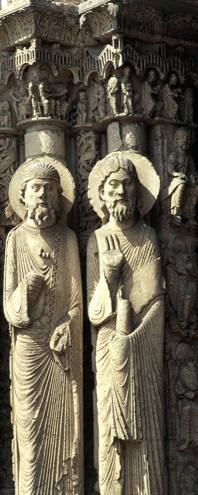
292
Figure 18-49 Ekkehard and Uta, statues in thewest choir, Naumburg Cathedral, Naumburg,Germany, ca. 1249–1255. Painted limestone,approx. 6’ 2” high.

German (High) Gothic Sculpture
•German Gothic sculpture is known fordepicting emotional scenes and human qualities
•It is quite independent from the architecture
•They tend to be in high relief and in the round,usually only attached with a pedestal andcanopy
293
Figure 18-48 Death of the Virgin, tympanum of left doorway, southtransept, Strasbourg Cathedral, Strasbourg, France, ca. 1230.

German (High) Gothic Sculpture way, way emotional, high drama
294
Figure 18-51 Virgin with the DeadChrist (Röttgen Pietà), from theRhineland, Germany, ca. 1300–1325.Painted wood, 2’ 10 1/2” high.Rheinisches Landemuseum, Bonn.

German (Late) Gothic Sculpture
•Not particularly naturalistic, butextremely emotional
•“The Rottgen Pieta” pieta means pityin Italian
•Suffering is accentuated
•Meant to evoke great emotion in theviewer---reconcile with your sins…
295
Figure 18-23 Interior of the upperchapel, Sainte-Chapelle, Paris, France,1243–1248.

Rayonnant Style (French)
•Sainte Chapelle is a small cathedral inParis commissioned by King Louis IXto hold his collection of precious relics
•Crown of Thorns, the lance thatpierced Christ’s side, part of the Truecross and a nail from the crucifixion
•Louis IX was known for his piety anddevotion to Christianity
296
Figure 18-25 West facade of Saint-Maclou, Rouen, France, ca. 1500–1514.


Flamboyant Style (French)
297
Comparing English and French Gothic Styles
In comparing French and English Gothic styles, you will notice thestonework on English cathedrals to feel heavier and more squat
This shows the lingering predilection for Romanesque style, which wascalled Norman style in England
Gothic style spread, but was amalgamated with local tastes
French Gothic has much more of a vertical emphasis
The Salisbury Cathedral in England was much longer than FrenchGothic churches, and since the walls are not as tall, it did not requireflying buttresses
Salisbury also has a square apse and a double transept
Salisbury is in the country, not city, which can also explain its form
298
Figure 18-37Salisbury Cathedral,Salisbury, England,1220–1258; west facadecompleted 1265; spireca. 1320–1330.

Early English Gothic: The Decorated Style
299
Figure 18-38 Plan of Salisbury Cathedral, Salisbury, England,1220–1258.

Early English Gothic: The Decorated Style
300

•During this time, Gothic art was calledopus francigeno, or work in the Frenchstyle
•Wherever the style went, it held onto basicGothic features like pointed arches andstained-glass windows, but differentregions did adapt the style to fit theircultures
•English is categorized in 2 parts:
(early) Decorated and (late) Perpendicular
Early English Gothic: The Decorated Style
Salisbury Cathedral, Salisbury, England, 1220–1258
301
Figure 18-39 Interior of SalisburyCathedral (view facing east), Salisbury,England, 1220–1258.

•The hallmark of the Decorated styleis ornate decoration of architecturalelements
•Often added extra ribs to thevaulting, making some churchceilings look like spider webs
•Salisbury is Decorated Style
Early English Gothic: The Decorated Style
302
Figure 18-40 Choir of GloucesterCathedral (view facing east),Gloucester, England, 1332–1357.

Late English Gothic Style: The Perpendicular Style
•Perpendicular style is so namedbecause of its emphasis on verticality
•Windows are taller, note the largewindow in the choir, the tall lancetsvisually unite the choir from floor toceiling
•Fan vaults, a collection of ribbedvaults that meet and project downwardfrom the ceiling like stalactites
303

Late English Gothic Style: The Perpendicular Style
Ceiling of Gloucester Cathedral,Gloucester, England, 1332–1357.
304
Figure 18-55 LORENZOMAITANI, west facade ofOrvieto Cathedral,Orvieto, Italy, begun 1310.

Italian Late Gothic
305
Figure 18-57 Milan Cathedral (view from the southwest), Milan, Italy,begun 1386.
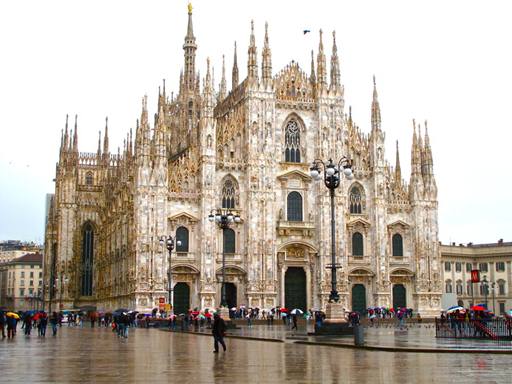
Italian Late Gothic
Proto-Renaissance(International Gothic)(Late Gothic)(Late Medieval)13th - 14th CDucento (1200’s 13th C)Trecento (1300’s 14th C)
306
307
These are the “rock-stars” of this period:
•Duccio di Buoninsegna from Siena and
•
•Giotto di Bondone from Florence
Duccio and Giotto re-introduce classical elements to painting:
•the human form
•human emotions
•the natural world
The Proto-Renaissance, 13th -14th C
308
Figure 19-17 ARNOLFO DICAMBIO and others,Florence Cathedral (viewfrom the south), Florence,Italy, begun 1296.

• BANKING and TEXTILES formedthe financial foundations for the city.
• It was mainly because of WOOL thatFlorence prospered.
(everyone wore it!)
• Bankers and weavers helped financethe burst of artistic creativity thatwould become the Renaissance.
The Proto-Renaissance, 13th C
•The Cathedral was started at this time, but it will take a while tofigure out that dome… (ch. 21)
309
Figure 19-2 NICOLAPISANO, pulpit ofPisa Cathedralbaptistery, Pisa, Italy,1259–1260. Marble,approx. 15’ high.

• The 13th century sculpture of Nicola Pisanoexhibits and interest in classical forms unlike thatfound in the works of his predecessors. (due to thehumanistic culture of Sicily under its king, HolyRoman Emperor Frederick II)
•Frederick’s nostalgia for the past grandeur ofRome fostered a revival of Roman sculpture anddecoration in Southern Italy before the mid 13thcentury.
• Since Pisano received his early training in thisenvironment, he may have been influenced byRoman artworks.
The Proto-Renaissance, 13th C
310
Figure 19-4 GIOVANNI PISANO,The Annunciation and the Nativity,detail of the pulpit of Sant’Andrea,Pistoia, Italy, 1297–1301. Marble relief,approx. 2’ 10” x 3’ 4”.

• Giovanni Pisano= NicolaPisano’s son
• Giovanni followed in hisfather’s footsteps, also carvingmassive pulpits
• however, his style was lessclassical and more derivative ofthe French Gothic tradition
• Giovanni arranged his figuresloosely and dynamically anddisplay a nervous agitation as ifmoved by the spirit…
The Proto-Renaissance, 13th C
311

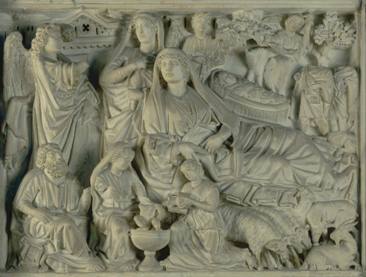
The Proto-Renaissance, 13th C
Nicola… more Classical…
Giovani… more Gothic…
312
Figure 19-1 BONAVENTURA BERLINGHIERI, panel from the SaintFrancis Altarpiece, San Francesco, Pescia, Italy, 1235. Tempera on wood,approx. 5’ x 3’ x 6”.
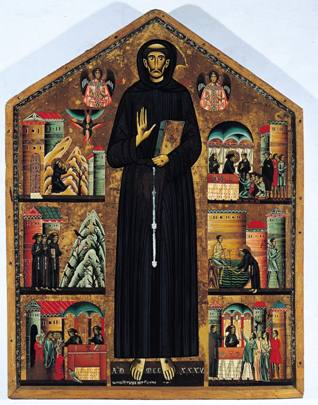
The Proto-Renaissance, 13th C
•St. Francis is painted very Christ-like:
•4 of the 6 scenes depict St. Francisperforming miracles…
•stigmata
•Maniera greca (Greek Style):Byzantine style of painting popular inItaly during the 12th – 14th C
•This is one of the oldest knownrepresentations of St. Francis…
313
Figure 19-6 CIMABUE, MadonnaEnthroned with Angels and Prophets,ca. 1280–1290. Tempera on wood, 12’ 7” x7’ 4”. Galleria degli Uffizi, Florence.

• The construction of Florence Cathedraland other new churches created ademand for altarpieces, chapel frescoesetc.
• Although Byzantine in style, Cimbue’swork showed the first signs of the newimpulse toward naturalism
• Example: Mary has knees…
The Proto-Renaissance, 13th C
314
Figure 19-7 GIOTTO DI BONDONE,Madonna Enthroned, ca. 1310.Tempera on wood, 10’ 8” x 6’ 8”.Galleria degli Uffizi, Florence.

• painted for the Church of All Saints(Ognissanti) in Florence.
• The gold background and the lack ofproportion between the Virgin and theother figures = Byzantine
• However, Giotto did place the Virginon a THREE-DIMENSIONAL throne.
The Proto-Renaissance, 14th C
315
Figure 19-8 GIOTTO DIBONDONE Interior of the ArenaChapel (Cappella Scrovegni),Padua, Italy, 1305–1306.

•Enrico’s Scrovegni’s enormouswealth had been inherited from hisfather, Reginaldo, a notoriousmoney lender whose exorbitantinterest rates were castigated byDante in his Divine Comedy
•This chapel was a response toDante and the world…demonstrating holiness…
The Proto-Renaissance, 14th C
Figure 19-9 GIOTTO DIBONDONE, Lamentation,Arena Chapel, Padua, Italy,ca. 1305. Fresco, 6’ 6 3/4” x 6’3/4”.
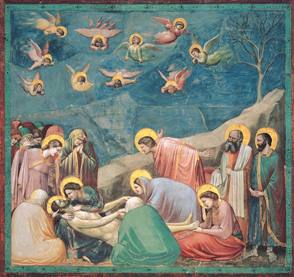
• Giotto created this illusion of volume byallowing light to illuminate parts of eachfigure while leaving the rest in shade
•Development of Chiaroscuro, the use ofdramatic contrasts of light and dark toproduce modeling
• Giotto thus began a style in Western artthat would endure for seven centuries
•“I am the man who brought paintingto life…whatever is found in naturemay be found in my art.”
The Proto-Renaissance, 14th C
Figure 19-14 PalazzoPubblico, Siena, Italy, 1288–1309.

•Siena is 30 miles south of Florence
•The 2 cities competed for politicalpower, commercial wealth and artisticprestige
The Proto-Renaissance, 14th C
•This is a Gothic style city hall, thecampinile was the city’s lookout
•The Sienese also had a Cathedraldedicated to the Virgin…
318

Figure 19-10 DUCCIO DIBUONINSEGNA, Virgin andChild Enthroned with Saints,principal panel of the Maestàaltarpiece, from the SienaCathedral, Siena, Italy, 1308–1311. Tempera on wood, panel7’ x 13’. Museo dell’Opera delDuomo, Siena.
Duccio was commissioned by the directorsof the Sienese to paint a huge alterpiece forthe cathedral
2 sides, over 50 panels, all tempera on wood
Because the central, largest panel depicts theVirgin and Child in majesty, it is called theMaesta
Although indebted to the Byzantine tradition,this painting reveals a new naturalism
The Proto-Renaissance, 14th C
Like Giotto, Duccio portrays a rangeof emotions, especially on the back ofthe alterpiece in the Betrayal ofChrist
He carefully paints the fall of lightand shade across each figure and therobes show volume and real bodiesunderneath
Duccio wrote the following prayeralongside his signature at the base ofMary’s throne: “Holy Mother of G-d, be the cause of peace to Sienna,and of life to Duccio because hepainted you thus.”
The Proto-Renaissance, 14th C

Figure 19-11 DUCCIO DIBUONINSEGNA, Betrayal ofJesus, detail from the back of theMaestà altarpiece, from the SienaCathedral, Siena, Italy, 1309–1311.Tempera on wood, detail approx.1’ 10 1/2” x 3’ 4”. Museodell’Opera del Duomo, Siena.
Figure 19-12 SIMONE MARTINIAND LIPPO MEMMI(?),Annunciation, 1333 (framereconstructed in the nineteenthcentury). Tempera and gold leaf onwood, approx. 10’ 1” x 8’ 8 3/4”.Galleria degli Uffizi, Florence.

•Duccio’s use of luxurious colorsand love of ornamental detailsguided a new generation of artistsin Sienna, led by Simone Martini
•Some art historians believe Martinimay have been one of Ducciosassistants on the Maesta
•In 1333 Martini was asked by thedirectors of the cathedral to createan Annunciation alterpiece tocomplement Duccio’s
The Proto-Renaissance, 14th C
Figure 19-15 Ambrogio Lorenzetti,Peaceful City, detail from Effectsof Good Government in the Cityand in the Country, Sala della Pace,Palazzo Pubblico, Siena, Italy,1338–1339. Fresco.

Sienna’s ruling council asked Lorenzetti to decorate the walls of theirmeeting hall in the Palazzo Pubblico with a vast painting contrasting theeffects of bad and good government
This is the first secular commission since the fall of Rome…
note the benefits of peace: well-stocked stores, attentive students andknowledgeable teachers, joyous maidens
The Proto-Renaissance, 14th C
322
Figure 19-16 AmbrogioLorenzetti, PeacefulCountry, detail from Effectsof Good Government in theCity and in the Country, Saladella Pace, PalazzoPubblico, Siena, Italy, 1338–1339. Fresco.

•Lorenzetti’s Peaceful Country portion of the fresco provides a sweepingview of one of the first landscapes painted since antiquity
•Contented peasants, bountiful fields
•In the upper left corner an allegorical figure representing Securityholds a scroll with an inscription promising safety to all who liveunder the rule of law
The Proto-Renaissance, 14th C
Art and Death
•Everything seemed so good, until just ten years after Lorenzetti finishedhis fresco, an outbreak of bubonic plague would devastate thepopulation of both cities
•By 1348 more than half the people of Florence and 2/3s the people inSiena were dead
Known as the Black Death, the plague wiped out a third of Europe’spopulation.
Anguished survivors saw the plague as G-d’s wrath for humanity’searthly sins, and art became reflective of misery, mourning and self-reproach
It would take 50 years for a new generation of artists in Italy toremember the pioneering achievements of Giotto and Duccio
Early Italian Renaissance15th Century
324
•The Florentines believed that contact with the classical past wouldenrich their own culture by: promoting civic responsibility, encouragingartistic creativity and rewarding individual excellence.
•Art historians have traditionally divided the Renaissance into twodistinct phases---
•The Early Renaissance lasted most of the 15th century and began inFlorence.
•The High Renaissance began in Rome in the early 16th century andwould later spread to Venice.
325
Figure 21-1 FILIPPOBRUNELLESCHI,Sacrifice of Isaac,competition panel for eastdoors, baptistery of FlorenceCathedral, Florence, Italy,1401–1402. Gilded bronzerelief, 1’ 9” x 1’ 5”. MuseoNazionale del Bargello,Florence.


Figure 21-2 LORENZOGHIBERTI, Sacrifice ofIsaac, competition panelfor east doors, baptisteryof Florence Cathedral,Florence, Italy, 1401–1402. Gilded bronze relief,1’ 9” x 1’ 5”. MuseoNazionale del Bargello,Florence.
The BaptisteryCompetition
•In 1401 the Guild ofCloth Merchants inFlorence sponsored acompetition to see whowould win thecommission to cast a newset of doors for theBaptistery.
•Contestants had tosubmit a panel depictingthe story of Abraham’ssacrifice of Isaac.
•The finalists…
326
Figure 21-4 LORENZOGHIBERTI, east doors (“Gates ofParadise”), baptistery, FlorenceCathedral, Florence, Italy, 1425–1452.Gilded bronze relief, approx. 17’ high.Modern copy, ca. 1980. Originalpanels in Museo dell’Opera delDuomo, Florence.

• In 1401, Ghiberti andBrunelleschi entered acompetition to make aset of doors for theBaptistery.
• Ghibertis won, and wascomissioned to makeanother set of doorsdevoted to ten episodesfrom the Old Testament.
327
Figure 21-6 NANNI DI BANCO,Four Crowned Saints, Or SanMichele, Florence, Italy, ca. 1408–1414. Marble, figures approx. life-size. Modern copy in exterior niche.Original sculpture in museum onsecond floor of Or San Michele.

Nanni di Banco andDonatello at San Michele
In the spirit ofcompetition, in 1406 thecity assigned a niche in thewall of San Michele tospecific guilds
Each guild did arepresentation of theirpatron saint
328
Figure 21-7 DONATELLO, Saint Mark, Or San Michele, Florence, Italy,1411–1413. Marble, approx. 7’ 9” high. Modern copy in exterior niche.Original sculpture in museum on second floor of Or San Michele.

Donatello at Or San Michele
•The Linen Weaver’s guild hired youngDonatello who had already worked forGhiberti and traveled to Rome withBrunelleschi
•Donatello was eager to show what hehad learned… check out his powerfulhands and alert eyes
•This sculpture absolutely luanchedDonatello into stardom, and he isconsidered the most importantRenaissance sculptor beforeMichelangelo
329
Figure 21-12 MASACCIO, Holy Trinity, SantaMaria Novella, Florence, Italy, ca. 1428. Fresco,21’ x 10’ 5”.

• The two figures kneeling at the bottom of thepainting represent the two donors whocomissioned the painting.
• The use of linear perspective created theillusion of depth so successfully that the viewerscalled it the ‘‘hole in the wall’’
•This is a vivid example of pyramid ortriangular composition, rather than placingfigures on a horizontal line, he linked them in aseries of interlocking pyramids
•First used by Masaccio, the pyramid structurebecame a hallmark of the Renaissance
330
Figure 21-10 MASACCIO, Tribute Money,Brancacci Chapel, Santa Maria del Carmine,Florence, Italy, ca. 1427. Fresco, 8’ 1” x 19’ 7”.

Masaccio and the Brancacci Chapel
•His Holy Trinity was so successful, he earned a commission to paint aseries of frescos for the Branacci Chapel in Florence
•This scene is a prime example of a continuous narration, where thesame figure appears more than once in the same space at differentstages of the story
•In the center, a Roman tax collector demands that Christ and hisapostles pay a tax, and they are worried and fearful because they do nothave enough money
•Christ tells Peter to go to the Sea of Galilee where he will find a cgoldcoin in the mouth of a fish
331
Figure 21-11 MASACCIO, Expulsion of Adam and Eve fromEden, Brancacci Chapel, Santa Maria del Carmine, Florence,Italy, ca. 1425. Fresco, 7’ x 2’ 11”.

•Like Giotto, Masaccio created figures whosefaces and gestures had powerful, emotionalexpressions
•This is his most dramatic painting, depicts theexpulsion of Adam and Eve
•Overwhelmed with guilt, Eve throws her headback in anguish, covering her nakedness
•Adam, helpless, covers his face in shame
•Masaccio died mysteriously at the age of 27
•Michelangelo studies the work of Masaccio
332
The Medici Family
•Florentine artists depended upon churches, guilds and wealthy familiesfor commissions.
•The Medici family dominates Florence’s economic, political andartistis life for much of the 15th century.
•Cosimo (1389-1464), Piero (1416-1464) and Lorenzo the Magnificent(1449-1492)
•They built libraries, churches and The Platonic Academy ofPhilosophy…
•Like Pericles and Augustus, the Medici understood to power of art toextend their fame and influence
333
Figure 21-13 FILIPPOBRUNELLESCHI, dome ofFlorence Cathedral (view from thesouth), Florence, Italy, 1420–1436.

• Brunelleschi angrily leftFlorence for Rome.Facinated by the ancientruins, he studied ancientmonuments and learnedthe exact measurements ofthe Doric, Ionic, andCorinthian orders.
• Brunelleschi paid specialattention to the Pantheonand its dome.
334
Figure 21-17 FILIPPOBRUNELLESCHI, facadeof the Pazzi Chapel, SantaCroce, Florence, Italy,begun ca. 1440.

335
Figure 21-19 FILIPPOBRUNELLESCHI, interiorof the Pazzi Chapel (viewfacing northeast), SantaCroce, Florence, Italy,begun ca. 1440.

336
Figure 21-22 PAOLO UCCELLO, Battle of San Romano, ca. 1455.Tempera on wood, approx. 6’ x 10’ 5”. National Gallery, London.

• Paolo Uccello, trained in theinternational style, wascommissioned by the Medici tocreate a series of panels forLorenzo’s bedchamber.
• The scene commemorates theFlorentine victory over theSienese.
• The bright orange fruit in thebackground is a symbol of theMedici.
• Uccello had an obsession withperspective that appealed to theMedici and the humanists, becauseperspective represented therationalization of vision.
337
Figure 21-23 DONATELLO, David, late1420s – late 1450s. Bronze, 5’ 2 1/4” high.Museo Nazionale del Bargello, Florence.

• Donatello chose to portray David as a nudeyouth, the first free standing life-size nude statuecast since antiquity.
• David stands triumphantly over the Philistine’ssevered head in a relaxed contrapposto pose,with Goliath’s sword in one hand and a rock inthe other.
• The Medici installed David in the courtyard oftheir Florence palace.
338
Figure 21-25 ANTONIOPOLLAIUOLO, Hercules andAntaeus, ca. 1475. Bronze, approx.1' 6” high with base. MuseoNazionale del Bargello, Florence.

• Standing only 18 inches high,the statue depicts hercules lockedin a ferocious struggle withAntaeus, son of the Earth goddess.
• This gave Pollaiuolo anopportunity to display his skill indepicting the human figure inaction, and his detailed knowledgeof human anatomy.
339
Figure 21-26 ANTONIO POLLAIUOLO, Battle of the Ten Nudes, ca.1465. Engraving, approx. 1 3” x 1’ 11”. Metropolitan Museum of Art, NewYork (bequest of Joseph Pulitzer, 1917).

340
Figure 21-27 SANDRO BOTTICELLI, Birth of Venus, ca. 1482.Tempera on canvas, approx. 5’ 8” x 9’ 1”. Galleria degli Uffizi, Florence.

• Illustrates the birth ofVenus, goddess of love
• A Roman statue owned bythe Medici and known as theMedici Venus served as themodel for Botticelli’s Venus
• She can be interpreted as aNeo-platonic symbol ofrebirth of beauty and divinelove
• Comissioned by the Medici to adornprivate rooms in their country villa!!
BOTTICELLI
341
Figure 21-28 SANDROBOTTICELLI, Portrait of aYouth, early 1480s. Temperaon panel, 1’ 4” x 1’. NationalGallery of Art, Washington(Andrew W. MellonCollection).

•Botticelli was a student ofPollaiuolo
•Whereas Pollaiuolo wasknown for lines thatemphasized action, Botticelli’slines are full of grace andrhythm
BOTTICELLI
342
Figure 21-9 GENTILEDA FABRIANO,Adoration of the Magi,altarpiece from SantaTrinità, Florence, Italy,1423. Tempera on wood,approx. 9’ 11” x 9’ 3”.Galleria degli Uffizi,Florence.

Palla Strozzi and Gentile da Fabriano
•The Strozzi family was also wealthy andpowerful in Florence, and Palla Strozzicommissioned Gentile da Fabriano to paint analterpiece for his family chapel in the church ofSanta Trinita.
•International Gothic Style
•The patron, himself, is part of the procession,proclaiming his piety and power
•Even though this is International Gothic style,Gentile did display knowledge of earlyRenaissance innovations
343
Figure 21-33 LEON BATTISTAALBERTI, Palazzo Rucellai, Florence,Italy, ca. 1452–1470.

The Rucellai Family and Alberti
•Giovanni Rucellai was awealthy merchant who made afortune manufacturing a highlyprized red dye.
•He used his wealth to build apalace for his family and a newfaçade for his church.
•He hired Leon Battista Albertifor both jobs
344
Figure 21-34 LEONBATTISTA ALBERTI, westfacade of Santa Maria Novella,Florence, Italy, ca. 1458–1470.

•
345
Figure 21-41 LEON BATTISTAALBERTI, west facade ofSant’Andrea, Mantua, Italy, designedca. 1470.

346
Figure 21-43 LEON BATTISTAALBERTI, interior of Sant’Andrea,Mantua, Italy, designed ca. 1470.

347
Figure 21-45 Andrea Mantegna, interior of the Camera degli Sposi (Room of theNewlyweds), Palazzo Ducale,Mantua, Italy, 1474. Fresco.

Ducal Palace in Mantua
Mantegna (1431-1506) wasGonzaga family’s court painter,made this for their palace
Camera Picta
Portraits of the patrons, theircourtiers, and pet dog
Provides valuable informationabout court culture of time
348
Figure 21-46 Andrea Mantegna, ceiling of the Camera degli Sposi (Room of theNewlyweds), Palazzo Ducale,Mantua, Italy, 1474. Fresco, 8’ 9” in diameter.

Foreshortening :
The use of perspectiveto represent in art theapparent visualcontraction of an objectthat extends back inspace at an angle to theperpendicular plane ofsight
Mantegna
349
Figure 21-48 ANDREA MANTEGNA, Dead Christ, ca. 1501. Tempera on canvas,2’ 2 3/4” x 2’ 7 7/8”. Pinacoteca di Brera, Milan.

Mantegna
•At first, this seems like a realistic studyin foreshortening…
•Careful observation reveals that in factthe size of the feet has been reduced
•This is a great example of temperingnaturalism with artistic license
•Also a great example of how 15thcentury scientific learning still served thepurpose of religious devotion…
350
Figure 21-40 PERUGINO, Christ Delivering the Keys of the Kingdom to SaintPeter, Sistine Chapel, Vatican, Rome, Italy, 1481–1483. Fresco, 11’ 5 1/2” x 18’ 81/2”.

• Although an anachronism in apainting depicting a scene fromChrist’s life, the arches remindviewers of the close ties betweenConstantine and Saint Peter and ofthe great basilica the first Christianemperor built.
•Christ and Peter flank the trianglescentral axis which runs through thetemple doors, the paintings vanishingpoint.
• The spatial science allowedthe artist to organize the actionsystematically.
351
Figure 21-36 FRA ANGELICO, Annunciation, San Marco, Florence, Italy, ca. 1440–1445. Fresco, 7’ 1” x 10’ 6”.

• Angelico represents Gabriel and theVirgin with simplicity and serenity
•They appear in an impeccably paintedyet plain loggia
• As an admonition to heed thedevotional function of the images, heincludes a small inscription at the baseof the work that reads:
•“As you venerate, while passingbefore it, this figure of the intactVirgin, beware lest you omit to say aHail Mary.”
• Angelico’s simplicityand directness gainsuniversal appeal andreflects his own simpleand humble character
This devotional paintingis less concerned withhumanism…
352
Figure 21-38 FRA FILIPPOLIPPI, Madonna and Child withAngels, ca. 1455. Tempera on wood,approx. 3’ x 2’ 1”. Galleria degliUffizi, Florence.

He was a naughty friar, and veryworldly… He copied Masaccio’spaintings as a teen…
How is this religious imagereflective of the “humanism”emerging in many 15th C artists?
Early Northern Renaissance15th C
353
354
The Early Northern Renaissance key date: 1450 (15th C)
Historical Context……………………….Effect on the Art
*secularization =*new subject matter in North-
ern Renaissance painting
“humanization of religious themes
*capitalism/banking=*New patrons for the arts
urbanization/growth of
new markets
*invention of oil painting=*attention to luxurious surfaces
355
Figure 20-13 JAN VAN EYCK,Giovanni Arnolfini and His Bride,1434. Oil on wood, approx. 2’ 8" x1’ 11 1/2". National Gallery,London.

Jan van Eyck
Arnolfini Marriage Portrait
•Giovanni Arnolfini was anItalian merchant, arepresentative of the Medicifamily, living in the Flemish (ofFlanders) city of Bruges
•Bruges was a huge commercialcenter in Northern Europe
•Giovanni and Giovanna areextremely rich…
356
Figure 20-1 Limbourg brothers (Pol,Hennequin, Herman), January, from LesTrès Riches Heures du Duc de Berry,1413–1416. Ink on vellum, approx. 8 1/2"x 5 1/2". Musée Condé, Chantilly.

Limbourg Brothers and the Duc de Berry
•This is a page from a very famousBook of Hours, or a book of prayersto be recited at various “hours” of theday
•A famous component was itscalendar pages illustrating the laborsto be performed each month
•Jean, the Duke of Berry, was abrother to the king of France
357
Figure 20-2 LIMBOURG BROTHERS(POL, HENNEQUIN, HERMAN),October, from Les Très Riches Heures duDuc de Berry, 1413–1416. Ink on vellum,approx. 8 1/2” x 5 1/2”. Musée Condé,Chantilly.

Limbourg Brothers and the Duc de Berry
•Like the Italians, Northern artist werealso interested in reviving Classicalaesthetics, and were interested increating 3 dimensional space in theirpaintings
•Althought the Limbourg Brothers didnot use one-point perspectiveaccurately, their efforts do demonstratethe desire to bring the real world intotheir art
358
Figure 20-5 JAN VAN EYCK, GhentAltarpiece (closed), Saint Bavo Cathedral,Ghent, Belgium, completed 1432. Oil onwood, approx. 11’ 6" x 7’ 6".
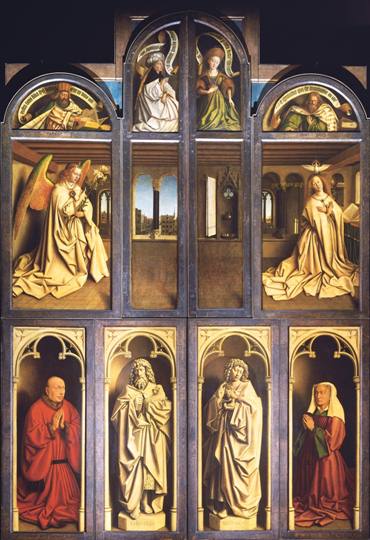
Jan van Eyck and the GhentAltarpiece
•This commission was actuallybefore the Arnolfini marriageportrait
•As the court painter for Philip theGood, Van Eyck had a strongreputation
•This work (a polyptych, ormultiple panel, alterpiece) wascommissioned by Jodocus Vydand his wife, Isabella Borluut
359
Figure 20-6 JAN VAN EYCK, Ghent Altarpiece (open), Saint Bavo Cathedral,Ghent, Belgium, completed 1432. Oil on wood, approx. 11’ 6" x 15’.

Jan van Eyck and the GhentAltarpiece -open
•The opened alterpiece contains images ofG-d flanked by the Virgin Mary and Johnthe Baptist
•Notice Van Eycks incredible eye fortexture
•Mary’s crown contains 12 jewels, representing the 12 tribes of Isreal
•On the sidelines, a choir of angels sing with a pipe organ
•Adam and Eve are on the outer panel wings
360
Figure 20-12a ROBERT CAMPIN (Master ofFlémalle), Mérode Altarpiece (open), TheAnnunciation (center panel), ca. 1425–1428. Oilon wood, center panel approx. 2’ 1” x 2’ 1”.Metropolitan Museum of Art, New York (TheCloisters Collection, 1956).

The Merode Altarpiece
•This altarpiece was made for private enjoyment and devotion, asindicated by its relatively small size
•Here, the Annunciation is happening in a middle class Flemish home
•On the left panel are Peter Ingelbrecht and his wife (the patrons) areappearing in the doorway, witnessing the event
361
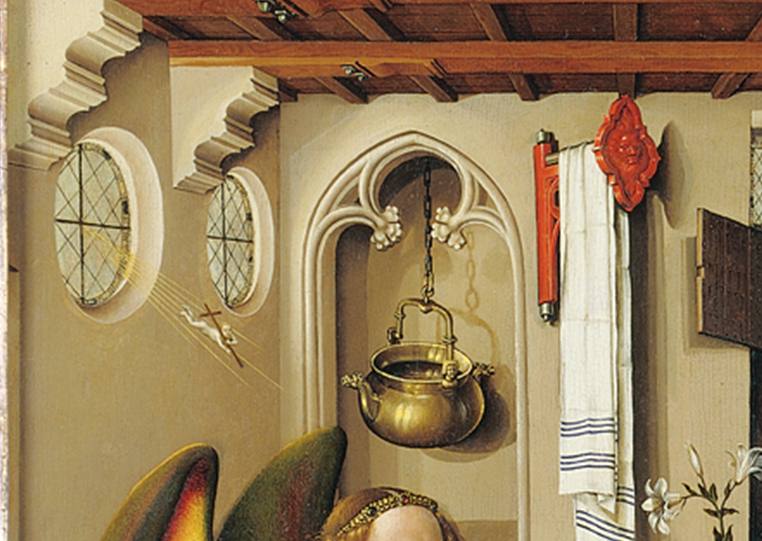
362
Figure 20-12b ROBERT CAMPIN (Master ofFlémalle), Mérode Altarpiece (open), The Annunciation(center panel), ca. 1425–1428. Oil on wood, center panelapprox. 2’ 1” x 2’ 1”. Metropolitan Museum of Art, NewYork (The Cloisters Collection, 1956).
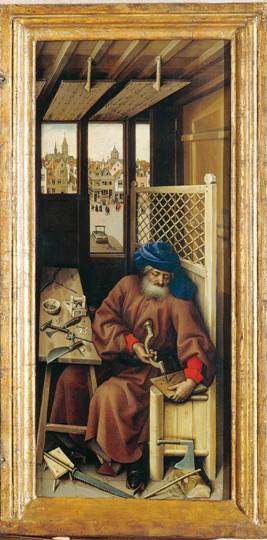
The Merode Altarpiece
•In the right panel, Joseph, the earthly fatherof Christ, works in his carpentry shop
•A mousetrap on the table symbolizes howChrist will be used as the bait to trap thedevil
•Strawberries and violets in the garden in theleft panel symbolize Mary’s other virtues,such as humility
363
Figure 20-7 ROGIER VAN DER WEYDEN, Deposition, from Notre-Dame hors-les-murs, Louvain, Belgium, ca. 1435. Oil on wood, approx. 7’ 3" x 8’ 7". Museo del Prado,Madrid.

364
Figure 20-7 ROGIERVAN DER WEYDEN,Deposition, from Notre-Dame hors-les-murs,Louvain, Belgium, ca.1435. Oil on wood,approx. 7’ 3" x 8’ 7".Museo del Prado, Madrid.
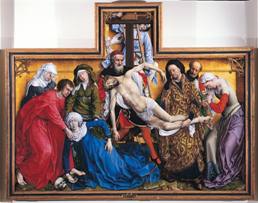
Rogier van der Weyden: Flemish Master
•Rogier was a contemporary of Van Eyk
•Rogier’s work not only has all thecharacteristics of Northern Renaissancepainting, but also displays tremendousemotion
•A Deposition scene is when Christ is beingbrought down from the cross by hisfollowers
•Mary has fainted, and the positioning of herbody echoes that of Christ---a pose that iscommon in Deposition paintings…
365
Figure 20-8a ROGIER VAN DER WEYDEN, Last Judgment Altarpiece(open), Hôtel-Dieu, Beaune, France, ca. 1444–1448. Panel, 7’ 4 5/8” x 17’ 11”.Musée de l’Hôtel-Dieu, Beaune.

366
Figure 20-8b ROGIER VAN DER WEYDEN, Last Judgment Altarpiece (open),Hôtel-Dieu, Beaune, France, ca. 1444–1448. Panel, 7’ 4 5/8” x 17’ 11”. Musée de l’Hôtel-Dieu, Beaune.

367
Figure 20-18 HIERONYMUS BOSCH, Garden of Earthly Delights. Creation of Eve(left wing), Garden of Earthly Delights (central panel), Hell (right wing), 1505–1510. Oilon wood, center panel 7’ 2 5/8" x 6’ 4 3/4". Museo del Prado, Madrid.

Bosch --- Revolutionary Unusual Imagery
368
Figure 20-9 DIRKBOUTS, Last Supper(central panel of theAltarpiece of the HolySacrament), Saint Peter’s,Louvain, Belgium, 1464–1468. Oil on wood, approx.6’ x 5’.

The High Italian Renaissance16th C
369
370
Giants of the High Renaissance
•Leonardo
•Michelangelo
•Raphael
•Bramante
•Titian
•The High Renaissance = late 15th to mid. 16th century
•Although Florence and Venice were important artisticcenters, Rome dominated the High Renaissance, as artistsflocked to the big city to decorate palaces, paint altarpiecesand build the new St. Peter’s Cathedral.
•No longer mere artisans, artists came to be regarded asalmost divine creative geniuses…
371
Figure 22-3b LEONARDO DA VINCI, Last Supper ca. 1495–1498. Fresco (oiland tempera on plaster), 29’ 10” x 13’ 9”. Refectory, Santa Maria delle Grazie,Milan.


•Leonardo was born in Vinci, a little town between Pisa and Florence
•He trained with Andrea Verrochio in Florence for ten years
•He left Florence for Milan in 1482 to work for Ludovico Sforza, theduke of Milan---one of Italy’s largest and richest cities
372
Figure 21-37 ANDREA DEL CASTAGNO, Last Supper, the Refectory,monastery of Sant’Apollonia, Florence, Italy, 1447. Fresco, approx. 15’ x 32’.

•For example, 50 years earlier, this was painted for the refectory in aconvent.
•Following tradition, Judas is visually separated from Christ and theother disciples.
373
Figure 22-3b LEONARDO DA VINCI, Last Supper (cleaned), ca. 1495–1498.Fresco (oil and tempera on plaster), 29’ 10” x 13’ 9”. Refectory, Santa Maria delleGrazie, Milan.
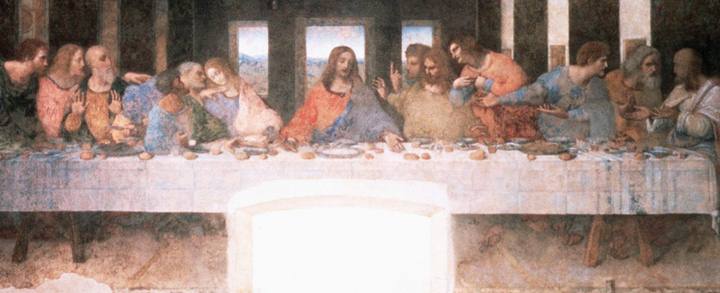
“A good painter has two chief objectives to paint---man and the intensityof his soul. The former is easy, the latter hard, for it must be expressedby gestures and movement of limbs.” …Leonardo
374
Figure 22-4 LEONARDO DA VINCI,Mona Lisa, ca. 1503–1505. Oil on wood,approx. 2’ 6” x 1’ 9”. Louvre, Paris.
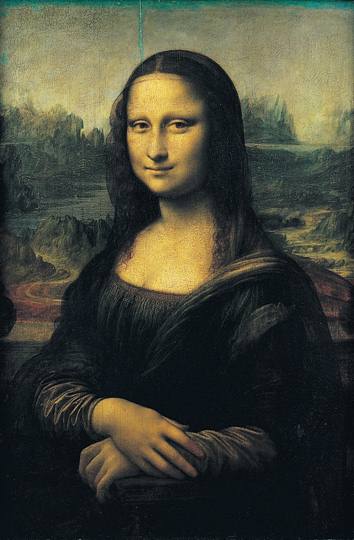
•Lisa di Antonio Maria Gherardiniwas the 24-year-old wife of aprominent Florentine merchant.
• Before the Mona Lisa, most femaleportraits were profile views,emphasizing a woman’s expensiveclothing and jewelry.
•In a break with tradition, Leonardoused a 3/4 pose, she wears nojewelry, and she seems to directlyface the viewer
375
Figure 22-5 LEONARDO DAVINCI, Embryo in the Womb, ca.1510. Pen and ink on paper. RoyalLibrary, Windsor Castle.

•His fame does not just rest onhis paintings, as his notebooksare filled with more than 5,500pages of drawings whichillustrate all of his manyinterests.
•This drawing correctedlongstanding errors and helpedlaunch the scientific study ofhuman anatomy.
376
Figure 22-8 DONATOD’ANGELO BRAMANTE,Tempietto, San Pietro inMontorio, Rome, Italy,1502(?).

Bramante’s Tempietto
•Like Brunelleschi andAlberti, Bramante studiedancient Roman ruins
•The Tempietto wascomissioned by KingFerdinand and QueenIsabella of Spain
377
Figure 22-6 DONATO D’ANGELO BRAMANTE, plan for the new SaintPeter’s, the Vatican, Rome, Italy, 1505.

378
Figure 22-9 MICHELANGELOBUONARROTI, David, 1501–1504. Marble,13’ 5” high. Galleria dell’Accademia,Florence.

• David is portrayed just before thebattle with Goliath, his contrappostoa throw back to early works fromGreece and Rome.
•David was promptly installed at theentrance to the palazzo dellaSignoria, the center of Florencescivic governmnet.
• His alert vigilance and heroiccourage symbolized their ownwillingness to defend their republic
379
Figure 22-10MICHELANGELOBUONARROTI, Moses,San Pietro in Vincoli,Rome, Italy, ca. 1513–1515.Marble, approx. 8’ 4” high.

•Julius II liked David somuch, he commissionedhim to come to Rome towork on his tomb, whichwas to include 40 life sizedfigures
•Julius intended to put themonument inside the newSt. Peter’s
380
Figure 22-12 Interior ofthe Sistine Chapel (viewfacing east), Vatican City,Rome, Italy, built 1473.Copyright © NipponTelevision NetworkCorporation, Tokyo.

• The Pope wantedMichelangelo to replacethe old, star spangledblue ceiling withportraits of the TwelveApostles.
• ObviouslyMichelangelo hadsomething moreambitious in mind.
381
Figure 22-13MICHELANGELOBUONARROTI, ceiling of theSistine Chapel, Vatican City,Rome, Italy, 1508–1512. Fresco,approx. 128’ x 45’.

• This was no easy task! Thecurved vaulted ceiling wasfar more challenging than aflat surface.
• His fresco techniquedemanded both speed andprecision.
• Finished after 4 years.
• Alternating in size, the 9panels tell the story of theCreation, Fall, andredemption of humanity.
382
Figure 22-17 RAPHAEL, Philosophy (School of Athens), Stanza dellaSegnatura, Vatican Palace, Rome, Italy, 1509–1511. Fresco, approx. 19’ x 27’.

• The most famous of four frescoes inthe Stanza della Segnatura
• A gathering of ancient philosophersfrom various eras, Plato and Aristotledominate the center
•
• Raphael underscored the rising statusof Renaissance artists by includingportraits of Leonardo da Vinci,Michelangelo, and himself.
• Brilliantly illustrates theHigh Renaissance ideals oforder, unity, and symmetry
• Raphael died on his thirty-seventh birthday. At hisrequest, he was buried insidethe Pantheon.
383
Figure 22-25 MICHELANGELO BUONARROTI, Last Judgment, fresco on the altarwall of the Sistine Chapel, Vatican City, Rome, Italy, 1534–1541. Copyright © NipponTelevision Network Corporation, Tokyo.

• Christ is depicted as astern and threateningjudge, the damnedplummeting into the mouthof hell.
• Even the saved soulsstruggle to ascend toheaven.
• Salvation must be earnedby faith and good works…he is refuting the teachingsof Martin Luther who saidfaith alone bringssalvation…
384
Figure 22-28 MICHELANGELOBUONARROTI, plan for Saint Peter’s,Vatican City, Rome, Italy, 1546.

•The Last judgment wasMichelangelo’s culminatingachievement as an artist
•He spent the remainingyears of his life primarilyworking on architecture
•After completing theCampidoglio, he turned hisattention to the New SaintPeter’s
385
Figure 22-29 MICHELANGELO BUONARROTI, Saint Peter’s (view from thenorthwest), Vatican City, Rome, Italy, 1546–1564. Dome completed by GIACOMODELLA PORTA, 1590.

•In the 40 years sinceJulius II first started St.Peter’s with Bramante,the project experiencedsporadic progress undernumerous leaders…
•At the age of 71,Michelangelo took overthe project..
386
MICHELANGELOBUONARROTI, 1564Marble, height 195 cmMilan, Castello Sforzesco

The Rondanini Pieta
•Michelangelo nevercompletely abandonedsculpture
•During his final years, hestarted, but did not complete 3pietas
•These pietas reveal muchabout his changing style…
387

The Renaissance in Venice
•Venice stood proudly apart fromother Italian cities
•It, too, was a prosperouscommercial center whose merchantssupported a thriving community ofartists
•But Venetians had differentattitudes towards life and art thanthose of the people of Rome orFlorence
•Venice is bathed in color…
388
Figure 22-31 GIOVANNI BELLINI,San Zaccaria Altarpiece, San Zaccaria,Venice, Italy, 1505. Oil on woodtransferred to canvas, approx. 16’ 5” x 7’9”.

•Bellini is often called the fatherof Venetian Painting.
•After learning how to use oilpaints, he abandoned fresco andtempera.
•Oil gives him a much widerrange of colors
•During his later years, he had aworkshop that housed two artists-Giorgione and Titian.
389
GIORGIONE DA CASTELFRANCO,Dresden Venus, 1510

•Though few in number, Giorgione’spaintings are both original andinfluential
•The Dresden Venus portrays a nakedgoddess lying asleep under a rock
•The soft shading of Venus’ body and the rich colors of the cloth she islying on demonstrate Giorgione’s mastery of the new technique of oilpainting
•The recumbent or reclining nude will become one of the most popularimages in European art
390
Figure 22-33 GIORGIONE DACASTELFRANCO (and/orTITIAN?), Pastoral Symphony, ca.1508. Oil on canvas, approx. 3’ 7” x 4’6”. Louvre, Paris.

•Giorgione’s paintings are known fortheir poetic qualities and ambiguousmeanings
•Created a beautifully natural valleyfilled with floating clouds and lacy trees
•The men seem to ignore two nakedwomen standing nearby
•The painting does not tell a story, butinstead seems intended to evoke aromantically idyllic mood
Giorgione’s Pastoral Symphony
391
Figure 22-35 TITIAN, Assumption of the Virgin,Santa Maria Gloriosa dei Frari, Venice, Italy, ca.1516–1518. Oil on wood, 22’ 6” x 11’ 10”.

•Shows the Madonna ascending to heaven,watched by astonished apostles, bathed ingolden light
•Titan used a color triangle formed by thevermilion robes of the two apostles at thebase and the Virgin’s crimson robe at theapex to unite the composition
•So impressed by his work, Bishop JacopoPesaro asked the artist to paint a secondaltarpiece for the church of the Frari
Titian’s Assumption of the Virgin
392
Figure 22-36 TITIAN, Madonna of thePesaro Family, Santa Maria dei Frari, Venice,Italy, 1519–1526. Oil on canvas, approx. 16’ x9’.

•Instead of following the exampleset by Leonardo and Raphael ofplacing figures in a pyramid, Titianplaced his figures along the arms ofthe right triangle that culminatedwith a portrait of Mary holding theChrist Child
•Allowed room for the Pesaro familyalong the base
•This is a dramatic example of sacraconversazione
Titian’s Madonna of the Pesaro Family
393
Figure 22-38 TITIAN, Venus of Urbino, 1538. Oil on canvas, approx. 4’ x 5’ 6”.Galleria degli Uffizi, Florence.

394
Figure 22-37 TITIAN, Meeting of Bacchus and Ariadne, 1522–1523. Oil on canvas,5’ 9” x 6’ 3”. National Gallery, London.

395
Figure 22-56 ANDREA PALLADIO,Villa Rotonda (formerly Villa Capra),near Vicenza, Italy, ca. 1566–1570.

Venetian Architect: Palladio
•Palladio was the most prominentVenetian architect during theRenaissance
•To become well informed on Classicalarchitecture, he spent a significantamount of time in Rome
•He studied Vitruvius’ landmark De Architectura, even illustrated it
•He writes his own treatise called The Four Books of Architecture thatwill influence architecture in the American colonies---Thomas Jeffersonowned all four volumes.
396
Figure 22-57ANDREAPALLADIO, planof the VillaRotonda (formerlyVilla Capra), nearVicenza, Italy, ca.1566–1570.

397
Chiswick House, by Lord Burlington, atChiswick, England, 1729.

Thomas Jefferson's Monticello, 1772
Thousands of versions of the Villa Rotonda have been created since it was built in the16th century…
398
Mannnerism: a popular style of painting that emergedduring the High Renaissance and lasted throughout the 16th century…the Italians referred to this style as il maniera
Mannerism became the accepted style of cultured and refined patrons. Itwas difficult to get commissions if one did not paint in il maniera.
399
Figure 22-42 JACOPO DAPONTORMO, Descent from the Cross,Capponi Chapel, Santa Felicità, Florence,Italy, 1525–1528. Oil on wood, approx.10’ 3” x 6’ 6”.

Pontormo
•Pontormo took traditionalreligious scenes and made themMannerist
•The young man who is squattingwhile supporting all of the weightof Christ’s body holds anunnatural, yet elegant andgraceful
•Notice the lack of focus
400
Figure 22-43 PARMIGIANINO, Madonnawith the Long Neck, ca. 1535. Oil on wood,approx. 7’ 1” x 4’ 4”. Galleria degli Uffizi,Florence.

Parmigianino
This painting typifies the tastes ofthe times:
•Small oval head
•A long neck
•An elongated body
•Long, elegant feet
•The facial expressions and her righthand all convey the delicacy andrefinement sought for in 16thcentury Italian painting
401
Figure 22-44 BRONZINO, Venus,Cupid, Folly, and Time (TheExposure of Luxury), ca. 1546. Oilon wood, approx. 5’ 1” x 4’ 8 3/4”.National Gallery, London.

Bronzino
•Interpretations of thispainting vary, but one idea isthat couples may be seducedby the pleasures of forbiddenlove, but time eventuallyexposes the true results ofthe the deceit, such as envyand wrath…
402
Figure 22-46 SOFONISBA ANGUISSOLA, Portrait of the Artist’s Sisters andBrother, ca. 1555. Methuen Collection, Corsham Court, Wiltshire.

403
Figure 22-48 GIOVANNI DA BOLOGNA,Abduction of the Sabine Women, Loggia deiLanzi, Piazza della Signoria, Florence, Italy,completed 1583. Marble, approx. 13’ 6” high.

Late Northern Renaissance16th C
404
405
Historical Context for the Late Northern Renaissance
Key date: 1525 (16th C)
•In 1456 Gutenberg develops the printing press and publishes the Bible
•By the early 16th C printmaking becomes an art form, leading to a widedissemination of artistic ideas
•In 1517 Martin Luther posts the 95 Theses condemning the Church’spractices and leading to the personalization of religious experience,especially in Northern Europe
•In 1534 Henry VIII founds the Church of England
406
Figure 23-2 MATTHIASGRÜNEWALD, IsenheimAltarpiece (closed), Crucifixion(center panel), from the chapel ofthe Hospital of Saint Anthony,Isenheim, Germany, ca. 1510–1515. Oil on panel, center panel 9'9 1/2” x 10’ 9”, each wing 8’ 21/2” x 3’ 1/2”, predella 2’ 5 1/2”x 11’ 2”. Musée d’Unterlinden,Colmar.

•The Isenheim Alterpiece was madebefore the teachings of Luther and hasprominent Catholic iconography
•It was located in a church adjacent to ahospital where many people were dyingfrom the plague
•When closed, the alterpiece conveyssuffering: Crucifixion, Christ’s skin hasoozing boils like a plague victim, thepredella has a Lamentation scene, andwhen the doors open, he looks amputatedlike the plague victims
407
Figure 23-3 MATTHIASGRÜNEWALD, Isenheim Altarpiece(open), center shrine carved byNIKOLAUS HAGENAUER in 1490,from the chapel of the Hospital ofSaint Anthony, Isenheim, Germany,ca.1510–1515. Shrine, painted and giltlimewood, 9’ 9 1/2” x 8’ 2 1/2” x 3’1/2” (center), 2’ 5 1/2” x 11’ 2”(predella). Each wing, oil on panel, 8’ 21/2” x 3’ 1/2”. Musée d’Unterlinden,Colmar.

•When the polyptych is opened, itcontains sculptures by Hagenauer andmore Grunewald paintings
•When fully opened, Chist appears at theResurrection, fully healed and in all Hisglory
•Saint Anthony converses with Saint Paulin heaven… no more demons
•These images inspired plague victimsliving in the Hospital of Saint Anthony
•It is no longer located in its originalcontext, without contextual knowledge,present day viewers have no idea howthis work inspired ill and dying people
408
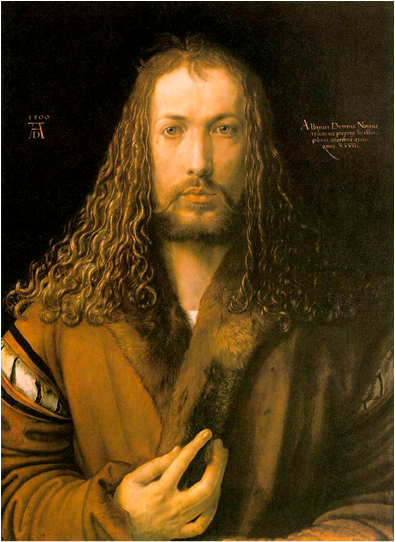
Self-Portrait at 28. 1500. Oilon panel. Alte Pinakothek,Munich, Germany.
Albrecht Dürer
•Durer is often referred to asthe Leonardo of the North
•He is the most acclaimed artistof the Northern Renaissance
•He mastered goldsmithing,watercolors, oil painting,woodcuts and engravings
•He was well traveled and asharp businessman
409
Figure 23-7 ALBRECHTDÜRER, The Great Piece of Turf,1503. Watercolor, approx. 1’ 4” x 1’1/2”. Graphische SammlungAlbertina, Vienna.

•Durer elevated the status ofartists in Northern Europe
•The Northern Europeanconcept of an artist was thatof a craftsman, like ablacksmith or carpenter
•When Durer saw how artistwere treated in Italy, hebegain making self-portraitsto show off his talents andsophistication
410
Figure 23-6 ALBRECHTDÜRER, The Fall ofMan (Adam and Eve), 1504.Engraving, approx. 9 7/8” x7 5/8”. Museum of FineArts, Boston (centennial giftof Landon T. Clay).

•Durer was most famous for his engravings
•An engraving is made when an artist uses ametal burin to incise a design into a metalplate
•The plate can then be inked and printedmultiple times, making them more affordablefor a broad audience
•The Fall of Man depicts the original sin,which necessitates the coming of Christ forChristians
411
Figure 23-5 ALBRECHT DÜRER,Four Apostles, 1526. Oil on panel,each panel 7’ 1” x 2’ 6”. AltePinakothek, Munich.

•The teachings of MartinLuther influenced AlbrechtDurer
•No one commissioned Durerto create this oil painting
•Durer donated it to theNuremberg City Hall
•John and Peter in the leftpanel. Paul and Mark in theright panel
412
Figure 23-8 ALBRECHT DÜRER,Knight, Death, and the Devil, 1513.Engraving, 9 5/8” x 7 3/8”.Metropolitan Museum of Art, NewYork.

• Image of death stands bywarrior’s side.
•Contains elements fromboth the Middle Ages andthe Renaissance.
•Art historians refer toskeletons in paintings ofthis nature as mementomori (reminders of death)
413
Figure 23-10 HANS HOLBEIN THE YOUNGER, The FrenchAmbassadors, 1533. Oil and tempera on panel, approx. 6’ 8” x 6’ 91/2”. National Gallery, London.

• Depicts Jean de Dinteville andGeorges de Selve in all their finery
• The painting is filled with symbols
• The table holds various statussymols- Globe, book, lyre…
• Other symbols may be acommentary on the religious tensionson the Continent.
• Broken lyre string=discord
• Shape on the floor=skull(reminds us that everyonemust deal with mortality)
414
PIETER BRUEGEL THE ELDER, The Harvesters, 1565. Oil onpanel, The Metropolitan Museum of Art, New York
• Returned to the Netherlandtradition of depicting various seasons(Remember the Limbourg brothers!)
• The group in the foreground is comprised of a sleeping (drunk?) manand peasants eating lunch. A few men are still working in the fields.The background contains mountains that Brugel became familiar withduring his trips to Italy.
• Its interesting-- A church is in the background while the peasantsoccupy the foreground. (Humanism!)
415
Figure 23-26 EL GRECO,The Burial of Count Orgaz,Santo Tomé, Toledo, Spain,1586. Oil on canvas, approx.16’ x 12’.

• A 16th century painterfrom Spain (not aSpaniard!) Called ‘ElGreco’- ‘The Greek’
•His art is a strong blend ofLate Byzantine and ItalianMannerist elements
• His sense of movementand light prefigured theBaroque style.